Tread Labs built its range around one idea: a molded arch support you keep for good, with a top cover you peel off and replace when it wears. It's a clever system for walking, standing and running. Pickleball asks something different of an insole, because most of the load arrives sideways.
The best Tread Labs alternatives for pickleball are Superfeet All-Purpose Support for arch height choice, CURREX PICKLEBALLPRO for a court-specific build, PowerStep Pinnacle for firm support in exact sizes, SOLE for a heat-molded fit, and HeelBase Drive for court support printed as one piece.
Each one replaces a different part of what Tread Labs offers, so the right pick depends on the part you'd miss most. Below you'll find what Tread Labs does well, why players look elsewhere, the five alternatives in their makers' own terms, a comparison table, and a short test to run on court.
Key Takeaways
- Tread Labs pairs a molded arch support with a replaceable top cover, in four arch heights.
- No alternative here copies the two-part design, so plan to replace the whole insole when it wears.
- For arch height choice, Superfeet and CURREX each offer three profiles, and PowerStep Pinnacle comes in three versions.
- For a court-specific build, look at CURREX PICKLEBALLPRO or HeelBase Drive.
- For firm support without trimming, PowerStep Pinnacle sells exact sizes.
- If the problem is volume, try a thinner Tread Labs top cover before you switch brands.
- Judge any alternative by how it feels during side shuffles, not just walking.
What Does Tread Labs Do Well?
Tread Labs builds each insole in two parts. The bottom half is a molded arch support, which the company backs with what it calls its Million Mile Guarantee, forever. The top half is a recycled polyester top cover attached with low-profile hook and loop, so you peel it off and fit a new one when the cushioning wears down.
The second strength is fit. Every arch support comes in four heights, labeled Low, Medium, High and Extra High, with US and EU size ranges listed side by side. Few brands go that far. Most stop at three profiles, and plenty sell a single shape in every size.
The range itself is built around firm support. Tread Labs lists a handful of models, each sold in the same four arch heights:
- Pace 2: the flagship, described as firm support for plantar fasciitis, overpronation and other foot pain.
- Pace SL: the same support in a low-profile build for close-fitting shoes.
- Wide: a wider platform for wider feet and toe boxes.
- Ramble: firm but flexible support, aimed at people who stand all day, walk a lot, or are new to insoles.
If durability is the reason you bought Tread Labs in the first place, our comparison of Tread Labs against Superfeet looks at what wears out first on each and how the replacement costs add up over three years. The short version: the two-part design is Tread Labs' clearest advantage, and none of the alternatives below copies it.
Recovery assessment
Not sure which feature to replace?
Tell us where you feel discomfort and how often you play. The HeelBase assessment will guide you toward the most relevant support option.
Start the assessmentWhy Do Pickleball Players Look for a Tread Labs Alternative?
Nothing on this list means Tread Labs is a poor insole. Players switch because the brand's strengths line up with walking and standing, while their own needs come from the court. Four reasons come up again and again.
You want a build made for the court
Tread Labs describes its range mainly in terms of all-day support and common foot pain. That's a fair focus, but pickleball loads the foot differently. A split step, a hard stop at the kitchen line and a crossover all push your foot toward the edge of the shoe, so grip, heel hold and lateral control count for more than they do on a walk.
Your size falls awkwardly between its pairs
Tread Labs sells each size as a half-size pair, such as Men 8 to 8.5, with an EU range beside it. That suits most feet. If your court shoes are a half size bigger or smaller than your everyday pair, though, you may prefer a brand that sizes differently. The choice between trim-to-fit and exact sizing is mostly about how fussy your shoes are.
You'd rather the support take your shape
Four arch heights give you a close match, but each one is still a fixed shape. Some players would rather have a footbed that forms to their own arch, either with heat or with wear, instead of picking the nearest shape from a chart.
Firm isn't the feel you want
Tread Labs is open about the firmness of its flagship models, and for many people that's the point. A player who wants more cushioning underfoot, or who finds a firm shell hard to get used to during long sessions, may do better with a softer build or a different balance of support and padding.
The Best Tread Labs Alternatives for Pickleball
These five are listed by the job they do, not ranked against each other. Each description sticks to what the maker publishes about its own product, so you can check every detail on the brand's site before you buy.
Superfeet All-Purpose Support: arch height choice in three shapes
Superfeet's All-Purpose Support line is the closest match to Tread Labs' arch height system. It comes in Low, Medium and High Arch versions, and Superfeet suggests each for a different kind of shoe: the High Arch for roomy to moderate-fitting footwear, the Medium for a wide range of shoes, and the Low Arch for slim-fitting footwear in a slim profile.
Unlike Tread Labs, Superfeet sizes in ranges, such as Men 7.5 to 9, and asks you to trim the insole to your shoe. That makes it easier to fit an in-between size, at the cost of a careful cut. If you've used the older color names, our breakdown of Superfeet Green versus Blue maps them onto the current arch labels.
The tradeoff is that this is a general-purpose platform rather than a court build. It suits a player who mainly wants Tread Labs' arch height choice in a one-piece insole.
CURREX PICKLEBALLPRO: three arch profiles built for the court
CURREX built PICKLEBALLPRO for the court, listing pickleball, padel, paddleball, racquetball and squash as its uses, and says it's designed to enhance lateral control. Like Superfeet, it comes in three arch profiles, High, Medium and Low, through what CURREX calls Dynamic Arch Technology. The brand also lists an anti-slip Super Grip surface, targeted forefoot cushioning and a fully decoupled heel.
Of everything here, it's the most direct swap for a player who liked choosing an arch height but wants an insole designed around lateral movement. CURREX says it fits shoe widths up to 2E and sells it in letter sizes from XS to 2XL, each covering a range of shoe sizes. Our CURREX PICKLEBALLPRO review goes further into fit, volume and break-in.
The tradeoff is the size ranges. A letter size spans more than one shoe size, so plan to trim it to the outline of your shoe's own liner.
PowerStep Pinnacle: firm support in exact sizes
PowerStep Pinnacle is the alternative for players who like Tread Labs' firm feel. PowerStep describes it as a full-length insole with a firm but flexible contoured arch, a deep heel cradle and two layers of cushioning. The standard Pinnacle has a neutral arch, and PowerStep also sells Pinnacle Low and Pinnacle High versions.
Like Tread Labs, PowerStep sizes each pair to a half-size range and says no trimming is required, so it moves between shoes of the same size. If you're weighing it against the most common alternative, our look at PowerStep against Superfeet compares the two shells and who each tends to suit.
The tradeoff is focus. PowerStep frames Pinnacle around foot pain and everyday shoes, so think of it as a firm all-rounder rather than a court-specific build.
SOLE: a footbed molded to your own arch
SOLE takes the opposite approach to Tread Labs. Instead of offering a set of arch shapes, it sells footbeds that take your shape, either heated in an oven or molded gradually as you wear them. There are two main lines: Active, with an EVA foam base, and Performance, with a cork base, each in several thicknesses. Our comparison of SOLE's heat-moldable footbeds explains the molding process for court shoes.
That makes SOLE the alternative for a player who never felt any fixed arch height was quite right. SOLE doesn't make half sizes, which its own FAQ addresses, and it backs its footbeds with a 90 day guarantee, so there's time to mold a pair and play in it before you decide.
The tradeoff is the extra step. Molding takes care, and the result is only as good as the stance and the shoe you mold it in.
HeelBase Drive: court support printed as one piece
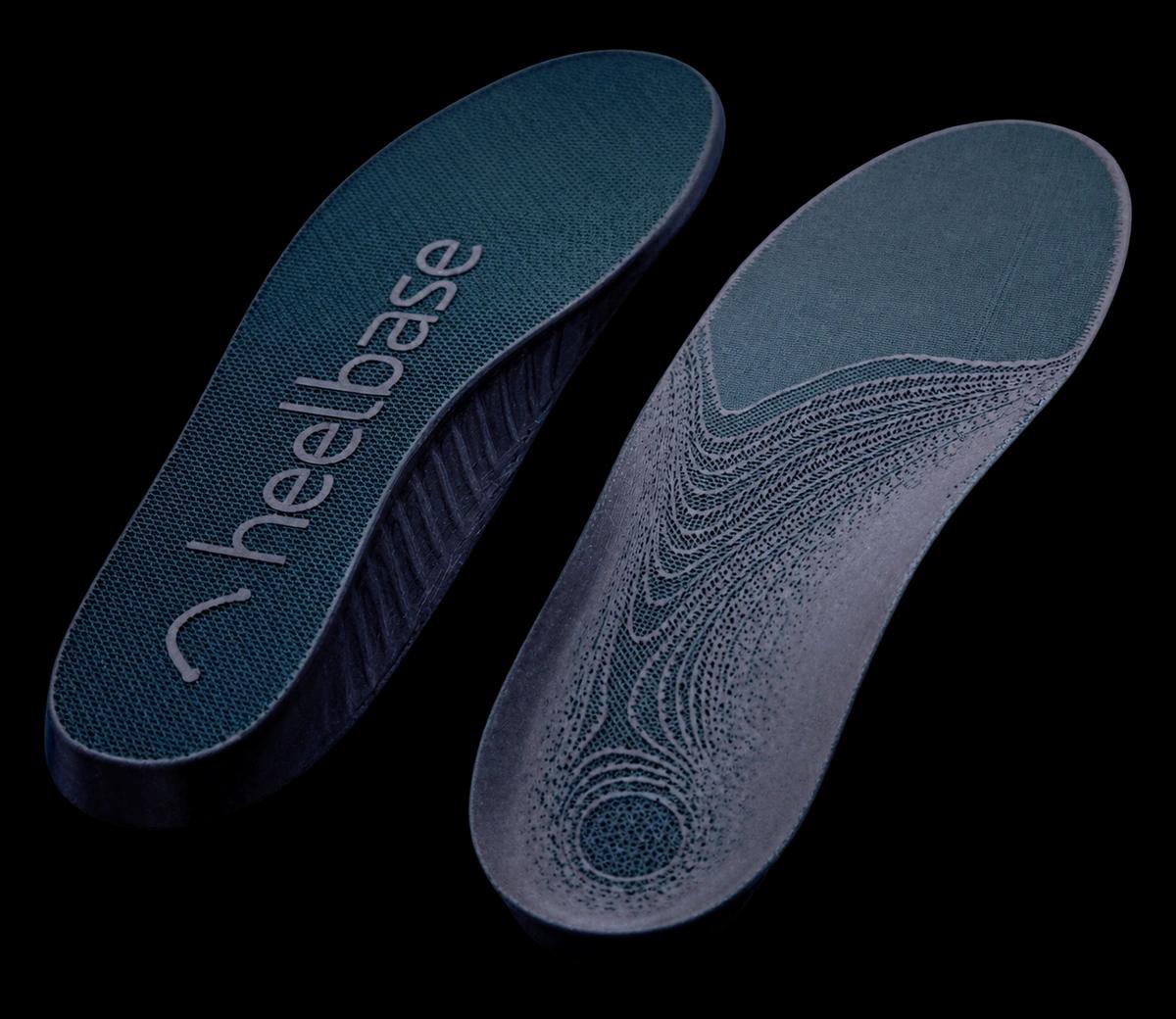
We make Drive, so read this entry with that in mind. HeelBase Drive is a 3D-printed court insole made for pickleball, printed as one piece with no glue line between its firmer arch shell and softer heel pad. That means there's no top cover to peel off, and no layers that can separate under lateral load.
It has an 11.3mm heel cup and a 16mm arch cradle, weighs 54.9g, and comes in nine exact sizes that must not be trimmed. Research on printed insoles is still young. A 2025 systematic review of 3D-printed orthoses found that printed insoles redistributed plantar pressure and improved comfort, while noting small studies and open questions about durability.
The tradeoff is arch choice. Drive has one arch shape in each size, so it suits a player who wants a court-specific build more than a menu of arch heights.
Product spotlight
The first 3D-printed insole for the court
Drive is printed as one continuous piece, engineered to the millimeter, with no glue lines and no bonded foams to separate. An 11.3mm printed heel pocket and shaped arch shell keep load off your plantar fascia through long sessions.
Shop DriveHow Do the Tread Labs Alternatives Compare?
Here's how the five line up against Tread Labs Pace 2 on the details each maker publishes. Sizing rows describe how each brand sells its sizes, not how any one shoe will fit.
| Insole | Arch options | Sizing | Build | Made for |
|---|---|---|---|---|
| Tread Labs Pace 2 | Four heights | Half-size pairs | Arch support plus replaceable top cover | All-day support |
| Superfeet All-Purpose Support | Low, Medium, High | Size ranges, trim to fit | One piece | General use |
| CURREX PICKLEBALLPRO | Low, Medium, High | Letter sizes, trim to fit | One piece, decoupled heel | Pickleball and racquet sports |
| PowerStep Pinnacle | Low, neutral, High | Half-size pairs, no trimming | One piece | Everyday shoes and foot pain |
| SOLE | Molds to your arch | Whole sizes | One piece, EVA or cork base | General use |
| HeelBase Drive | One shape per size | Nine exact sizes, no trimming | 3D-printed as one piece | Pickleball |
Which Tread Labs Feature Are You Replacing?
The quickest way to choose is to name the one thing you'd miss. Each Tread Labs strength points toward a different alternative:
- Four arch heights: Superfeet All-Purpose Support or CURREX PICKLEBALLPRO, each with three profiles, or PowerStep's three Pinnacle versions.
- Firm support: PowerStep Pinnacle is the closest in feel, with a firm but flexible shell and a deep heel cradle.
- No trimming: PowerStep Pinnacle and HeelBase Drive both arrive in exact sizes.
- A wide platform: Superfeet makes an All-Purpose Wide-Fit Support for widths 3E to 6E, and CURREX says PICKLEBALLPRO fits shoes up to 2E.
- The replaceable top cover: nothing here matches it, so budget for whole pairs.
If none of those feels like the deciding factor, start from the court instead. A player whose main complaint is the foot sliding or the heel lifting during lateral play is better served by a court build than by a closer copy of Tread Labs. For the wider field, our ranking of the best pickleball insoles scores the leading options on the criteria that count on court.
Looking for a Tread Labs Alternative in Europe?
Tread Labs lists an EU range beside each US size, such as EU 40 to 41, which makes ordering simple from Europe. Most of the alternatives here are sold on their US sites in US sizes only, so the label alone won't tell you which size to pick. Shop by your foot length instead, and check each brand's regional site or a local retailer before you order, since stock and size labels vary by country.
Two of the five are easy to find in Europe. CURREX is a German brand, founded in Hamburg, and European sports retailers stock its insoles. Superfeet is also sold by retailers across Europe, often with EU size ranges on the listing. Whichever you choose, measuring your foot length in centimeters gives you a number that converts cleanly between US, UK and EU charts.
Trim-to-fit insoles are forgiving when a conversion lands between sizes, because you cut them to your shoe's own liner. Exact-size insoles need the conversion to be right first time, so measure carefully and compare with the brand's chart.
How Much Does Arch Height Matter?
Arch height is Tread Labs' headline feature, so it's fair to ask how much difference it makes. The research is thinner than the marketing suggests, but it does show that support changes where your foot takes load.
In a 2026 study of 30 marathon runners, adding 3D-printed arch supports of different heights raised the share of force carried by the midfoot by roughly a fifth compared with no support, in both normal and high arches. The study tested supports of 9, 12 and 15mm, and the differences between those heights were smaller and less consistent than the jump from no support to some.
Two cautions apply. These were runners moving forward, not players moving sideways, and the study measured load, not pain or injury. The practical reading is modest: getting contact under your arch counts for more than chasing an exact height label. Choose the profile that touches your arch without pressing into it.
When Should You Stay With Tread Labs?
Switching isn't always the right move. An insole you've already broken in, in an arch height that suits you, has value that a new pair has to earn. Staying makes sense in a few situations:
- Your feet feel good after long sessions, and the only complaint is a worn top cover.
- You wear the same insoles in walking shoes and court shoes, and you value one arch shape across both.
- The Million Mile Guarantee and replaceable covers are the reason you bought them.
- Your problem is a snug court shoe, which a thinner top cover may solve.
Switch when the problem comes from the court itself: a heel that lifts on hard stops, a foot that slides on crossovers, or soreness that starts during lateral play and not on walks. Those point to grip, heel hold and lateral control, which is where the alternatives above differ most from Tread Labs.
Should You Change the Top Cover Before You Change Brands?
If your problem with Tread Labs is space inside a snug court shoe, the fix may not need a new brand at all. Tread Labs sells top covers in several styles and describes them as swappable to fit different footwear. The Pace 2 kit, for example, comes with Pace SL and 3 Quarter top covers for close-fitting shoes.
A thinner cover lowers your foot in the shoe without changing the arch support underneath, which is the part you chose so carefully. Check compatibility first, because Tread Labs notes that some top covers only fit certain arch supports. If the foot still sits too high, or the issue is grip and heel hold rather than room, that's when an alternative earns its place.
How to Test a Tread Labs Alternative on Court
A store aisle won't tell you how an insole handles a split step. Run this sequence before you commit to a new pair for a full evening of games:
- Take the factory liner out of your court shoe, and keep it as a template if the new insole needs trimming.
- Put the insole in, lace up in your court socks, and check that your heel sits fully back in the heel cup.
- Walk for a few minutes, then do side shuffles, a few split steps and a lunge to each side.
- Notice whether your foot slides toward the edge of the shoe, or whether your heel lifts as you push off.
- Play one short session, then check your feet for rubbing, hot spots or pressure under the arch.
- Only then use it for a long session, and compare how your feet feel the next morning.
Comfort is a fair test, not a soft one. In a 2025 study of 527 recreational runners, those who rated their shoes most favorably overall had a lower injury risk over six months than those who rated them least favorably. It's one study, in running shoes, but it supports trusting your own sense of fit.
Keep your Tread Labs insoles while you test. If the alternative doesn't settle after a few sessions, going back to a pair you know works is the fastest way to tell whether the new insole or something else is behind the change.
HeelBase insoles
Pickleball support starts inside your shoes
HeelBase makes three distinct insoles: a 3D-printed insole for regular court play, a reinforced insole for tournament volume, and a cushioned insole for off-court daily wear.
View HeelBase insolesFrequently Asked Questions
What is the best alternative to Tread Labs insoles?
It depends on what you want to keep. For arch height choice, Superfeet All-Purpose Support and CURREX PICKLEBALLPRO each come in three profiles. For firm support in exact sizes, PowerStep Pinnacle is the closest. For a molded fit, try SOLE. For a build made for the court with no trimming, HeelBase Drive is printed as one piece.
Are Tread Labs insoles good for pickleball?
They can work well, especially for players who want firm support and an exact arch height. Tread Labs describes its range around all-day support rather than racquet sports, so test the fit during side shuffles and split steps, not just walking. Watch for your heel lifting or your foot sliding on hard stops.
Which alternatives offer more than one arch height?
Superfeet All-Purpose Support comes in Low, Medium and High Arch versions, CURREX PICKLEBALLPRO in High, Medium and Low profiles, and PowerStep Pinnacle in Low, standard and High versions. Tread Labs is the only one of the group with four. SOLE takes a different route and molds to your arch instead.
Do any alternatives have replaceable top covers like Tread Labs?
None of the five here does. Superfeet, CURREX, PowerStep and SOLE are each built as one insole, and HeelBase Drive is 3D-printed as one piece. If the replaceable top cover is the feature you value most, staying with Tread Labs may make more sense than switching.
What's a softer alternative to Tread Labs Pace?
A cushioning-led insole or a molded footbed will usually feel softer than a firm shell. SOLE's Active line uses an EVA foam base, and PowerStep pairs its shell with two layers of cushioning. Within Tread Labs, Ramble is described as firm but flexible, which may suit a player who finds Pace too firm.
Is there a Tread Labs alternative sold in Europe?
Yes. CURREX is a German brand, and European sports retailers stock its PICKLEBALLPRO and other insoles. Superfeet is also widely sold by European retailers. Many alternatives list US sizes only on their own sites, so measure your foot length in centimeters and check the brand's size chart before you order.
Which Tread Labs alternative fits a snug court shoe?
Look for a low-profile option. Superfeet describes its All-Purpose Support Low Arch as slim enough for slim-fitting footwear, and SOLE sells thinner footbeds. Before switching, try a thinner Tread Labs top cover, since it lowers your foot without changing the arch support.
Pick the Feature You'd Miss Most
Start with the Tread Labs feature you'd miss. Arch height choice points to Superfeet or CURREX, firm exact sizing to PowerStep Pinnacle, a molded fit to SOLE, and a build made for the court to CURREX PICKLEBALLPRO or HeelBase Drive. Then test your pick with side shuffles before trusting it in a match.
Not sure which feature you'd miss most? The HeelBase assessment asks a few short questions about how often and where you play, then points you toward support that suits your game.