PowerStep sells two main families of insoles, and from the outside they're hard to tell apart. Pinnacle is the brand's flagship. PULSE is its athletic line. Both are full length, both use a firm arch shell, and both promise support without trimming. If you play pickleball, the question is which one belongs in your court shoes.
For most pickleball players, PULSE Performance is the better starting point. PowerStep builds both on the same firm but flexible polypropylene shell and neutral arch, but it designed PULSE for athletic shoes with an upgraded ShockAbsorb foam layer, while Pinnacle targets walking, work and casual shoes and comes in low and high arch versions.
Below, you'll find exactly what PowerStep says differs between the two, a side-by-side table, every version in each family, and a simple way to choose the right one for your feet and your court shoes.
Key Takeaways
- Pinnacle and PULSE Performance share one polypropylene shell, a neutral arch and a deep heel cradle.
- PULSE adds ShockAbsorb Premium Foam on top and is designed for athletic walking and running shoes.
- Pinnacle is aimed at walking, work and casual shoes, and comes in one more size.
- Only the Pinnacle family offers dedicated low arch and high arch versions.
- Both families include a Maxx version with a 2 degree medial post for overpronation.
- PowerStep sells exact sizes in both lines and says no trimming is required.
- For snug court shoes, PULSE Thin is the version PowerStep builds for tight-fitting shoes.
What's the Difference Between PowerStep Pinnacle and PULSE?
Less than the two names suggest. PowerStep describes the arch on both as a firm but flexible contoured neutral arch with a deep heel cradle, built from a polypropylene shell. Both have dual-layer cushioning over an EVA base and an odor control polyester top fabric. Both are aimed at standard arches and mild to moderate pronation.
The differences come down to three things PowerStep publishes:
- The top foam. Pinnacle uses a standard foam top layer, which PowerStep describes as plush. PULSE uses what it calls a soft and springy layer of upgraded ShockAbsorb Premium Foam across the entire insole.
- The intended shoe. PowerStep lists walking, work and casual dress shoes as the ideal home for Pinnacle, and athletic walking and running shoes for PULSE, which it says was designed by runners, for runners.
- The size range. Pinnacle comes in 12 sizes, from Men's US 3 to 16 and up. PULSE Performance comes in 11, from Men's US 3 to 15.
So the shell, which does most of the supporting, is the same. What changes is the cushioning you feel on top of it and the kind of shoe PowerStep had in mind. If you're weighing PowerStep against another brand entirely, our head-to-head of PowerStep and Superfeet looks at how the two brands differ in fitting, sizing and shell design.
PowerStep Pinnacle vs PULSE Performance at a Glance
Here's how the two flagship models compare on the details PowerStep publishes for each one.
| Feature | Pinnacle | PULSE Performance |
|---|---|---|
| Arch shell | Firm but flexible polypropylene | Firm but flexible polypropylene |
| Arch type | Neutral, deep heel cradle | Neutral, deep heel cradle |
| Top cushioning | Foam top layer | ShockAbsorb Premium Foam top layer |
| Base | EVA | EVA |
| Ideal shoe, per PowerStep | Walking, work, casual dress | Athletic walking and running |
| Sizes | 12, Men's US 3 to 16+ | 11, Men's US 3 to 15 |
| Widths | Up to 2E | Up to 2E |
| Trimming | Not required | Not required |
| Arch variants in family | Low, High, Maxx | Maxx |
Recovery assessment
Not sure which support your feet need?
Tell us where you feel discomfort and how often you play. The HeelBase assessment will guide you toward the most relevant support option.
Start the assessmentWhich Is Better for Pickleball, Pinnacle or PULSE?
For a player with standard arches in athletic court shoes, PULSE Performance is the closer match. PowerStep built it for athletic footwear, and a court shoe is an athletic shoe with a removable liner, which is what both lines are designed to replace. The ShockAbsorb layer adds cushioning on top of the shell without changing the support underneath.
Pinnacle earns the spot in three situations:
- Your arches are clearly low or clearly high, so Pinnacle Low or Pinnacle High fits your foot better than a neutral shell.
- Your feet are wider than 2E, which points to Pinnacle Wide Fit.
- You want one model across work shoes, walking shoes and court shoes, and you're happy with the standard foam on top.
Neither line is built specifically for court sports. PowerStep frames PULSE around running and Pinnacle around everyday shoes and foot pain. Both can work in a court shoe, but test them with side shuffles and hard stops, not just a walk, because pickleball pushes your foot sideways in a way neither line was designed around.
Does PULSE Have More Cushioning Than Pinnacle?
PowerStep's descriptions suggest PULSE leans further toward cushioning. It calls the PULSE top layer an upgraded ShockAbsorb Premium Foam that's soft and springy and gives bounce back with each step, running across the entire insole. Pinnacle is described as having two layers of plush cushioning, without the ShockAbsorb name.
PowerStep doesn't list a thickness in millimeters for either model on its product pages, so there's no published number to compare. What you can say is that both layers sit on top of the same shell. More cushioning changes how the insole feels under your foot at impact, while the shell decides how much support you get.
For pickleball, that distinction is useful. If your feet ache from hard courts after long sessions, the PULSE top layer is the one aimed at that. If the problem is support, such as an arch that collapses or a heel that rolls, cushioning alone won't fix it, and the version of the shell is the thing to change.
What Does a Neutral Arch Mean?
PowerStep describes both flagship models as neutral, and the word appears across its range. In PowerStep's own explanation, feet with neutral or standard arches naturally pronate a little when you walk: the ankle rolls slightly inward, and pressure moves toward the big toe and the inside of the foot. That small inward roll is normal. It's part of how the foot absorbs load.
A neutral shell supports that normal motion without trying to block it. That's different from a posted shell like the Maxx, which adds an angle under the heel to resist a larger inward roll, and from the Low and High versions, which change the height of the shell rather than its angle.
Most players have arches somewhere in the standard range, so a neutral model is a sensible first try if you've never thought about your arch type. If yours are clearly low, the common patterns in playing pickleball with flat feet are a good guide to whether a lower shell makes sense.
The Pinnacle Family: Every Version Explained
Pinnacle is where PowerStep puts most of its arch and width options. Each version keeps the same full-length build and dual-layer cushioning, and changes one thing.
Pinnacle
The standard model: a neutral arch for standard arches and mild to moderate pronation. If you don't know your arch type and your feet feel fine on most days, this is PowerStep's default.
Pinnacle Low
A lower arch shell for flat or low-arched feet, which PowerStep links to overpronation. It's the version to try if a standard arch feels like it's pushing up into your foot, or if your arch sits close to the ground when you stand.
Pinnacle High
A taller arch shell for high-arched feet. PowerStep positions it for mild supination, where the foot rolls outward and loads the outside edge, and points people with more pronounced supination to a separate model. Players with high arches and foot pain often feel a standard arch fail to reach their foot at all.
Maxx
The Maxx adds a 2 degree medial post, a slight angle under the inside of the heel, to the firm shell. PowerStep describes it as offering greater correction for overpronation, where the foot and ankle roll inward.
Pinnacle Wide Fit
A wider platform for shoes from 3E to 6E. The standard models fit widths up to 2E, so this is the version for players in genuinely wide court shoes. Wide feet have more options beyond PowerStep, and our list of the best pickleball insoles for wide feet compares several.
Pinnacle Plus Met
The standard Pinnacle with a foam metatarsal pad, a small dome that sits behind the ball of the foot. PowerStep aims it at ball of foot pain.
The PULSE Family: Every Version Explained
PULSE has fewer versions, all built around the same ShockAbsorb top layer and all aimed at athletic shoes.
PULSE Performance
The flagship athletic model, with the neutral arch and deep heel cradle described above. For most players with standard arches, this is the PULSE to start with.
PULSE Thin
A lower-profile build for tight-fitting shoes. PowerStep moves the shell to the outside of the insole, uses a low, flat heel cradle, and adds a non-slip pad under the heel to hold it in place. It lists running shoes, cleats, golf and cycling shoes among its uses.
In a court shoe that's already snug, this is the version that takes up the least room, and it's a common fix for court shoes that feel tight once an insole goes in.
PULSE Maxx
The athletic version of the Maxx idea, with the same 2 degree medial post and what PowerStep calls a slightly angled heel post for overpronation.
PULSE Plus Met
PULSE Performance with a built-in metatarsal pad, for players whose pain sits under the ball of the foot. Forefoot pain has several causes, so it pays to know what's behind yours before you add a met pad, and a podiatrist can tell you.
Which PowerStep Insole Is Best for You?
Start with your foot, then your shoe. This shortlist matches each common need to the PowerStep version built for it:
- Standard arches, athletic court shoes: PULSE Performance.
- Standard arches, one pair across work and walking shoes too: Pinnacle.
- Low or flat arches: Pinnacle Low.
- High arches: Pinnacle High.
- Feet that roll inward noticeably: Maxx or PULSE Maxx.
- Feet wider than 2E: Pinnacle Wide Fit.
- A snug court shoe with little spare room: PULSE Thin.
- Pain under the ball of the foot: Pinnacle Plus Met or PULSE Plus Met.
If you think you overpronate, it's worth confirming it before you pay for a posted shell. Many players who roll inward a little need nothing more than a standard neutral arch, and the signs of overpronation in pickleball are easy to check at home with a pair of worn shoes.
Product spotlight
The first 3D-printed insole for the court
Drive is printed as one continuous piece, engineered to the millimeter, with no glue lines and no bonded foams to separate. An 11.3mm printed heel pocket and shaped arch shell keep load off your plantar fascia through long sessions.
Shop DriveDoes a Different Arch Height Change Your Alignment?
PowerStep frames its versions around arch type and pronation, so it's fair to ask how much a different shell height changes the way your foot moves. The research suggests less than you might expect.
In a study of 19 runners, arch supports of different heights, from none to 40mm, had no systematic effect on how far the rearfoot rolled inward or how much the shin rotated while walking. The differences between conditions were small, and the variation within each person was large.
An older review of foot orthoses during running found something similar for forces. Effects on impact and loading rate were unclear, and the most consistent change was a small shift in the forces acting around the rearfoot. In plain terms, a shell seems to change how load is shared across the foot more than it realigns the leg.
That's a useful frame for choosing between versions. Pick the arch height that contacts your foot comfortably along its length, rather than one that promises to correct your alignment. A shell that presses into your arch is the wrong height, whatever your foot type is called.
How to Fit a PowerStep Insole in a Court Shoe
PowerStep designs both lines to replace a removable factory liner, and sells them in exact sizes, so fitting is simple if you follow a few steps:
- Remove your court shoe's factory liner. PowerStep insoles are meant to replace it, not sit on top of it.
- Pick your size from PowerStep's chart. Each size covers a half-size pair, such as Men's 9 to 9.5.
- Slide the insole in and press the heel fully back into the heel of the shoe.
- Lace up in your court socks and check that the arch sits under your arch, not ahead of or behind it.
- Walk, then shuffle sideways and do a few split steps before you play a full session.
Don't trim a PowerStep insole to fix a length problem. PowerStep says no trimming is required, and cutting a sized shell can leave the arch in the wrong place. If the insole is too long, the next size down is the better fix.
Give your feet a few short sessions to adjust to a firm shell. Comfort is a fair test here. A 2025 study that followed 527 recreational runners for six months found that runners who liked their shoes most were injured less often than those who liked them least. If a PowerStep still feels wrong after a week, it's probably the wrong version, not something to push through.
One Pair or Two? Using PowerStep Across Your Shoes
Because neither line needs trimming, one pair can move between shoes of the same size. That's convenient, but think about which shoes you're moving between. PowerStep's own split hints at the answer: Pinnacle for walking, work and casual shoes, PULSE for athletic ones.
If pickleball is the main reason you're buying, put PULSE Performance in your court shoes and leave it there. If you also want support at work or on walks, a Pinnacle in those shoes saves swapping before every session and keeps each pair matched to the shoe it lives in.
Exact sizing is what makes swapping easy. A trimmed insole is cut to one shoe's outline, and that's the main practical difference between trim-to-fit and exact sizes. Whichever way you go, check that your heel sits fully back each time you move a pair, because shoes differ more than insoles do.
How Long Do Pinnacle and PULSE Last?
PowerStep gives the same guidance for both lines: its insoles should last six months or longer, depending on wear, usage and activity level. Court players who play several times a week can expect to sit toward the shorter end, because lateral play works the cushioning and top fabric harder than walking does.
Care is the same too. PowerStep recommends spot cleaning with a mild detergent, letting the insoles air dry, and never immersing them in water. Watch for a top fabric worn through at the ball of the foot, cushioning that no longer springs back at the heel, or the return of the discomfort that made you buy them.
Where Does HeelBase Drive Fit In?
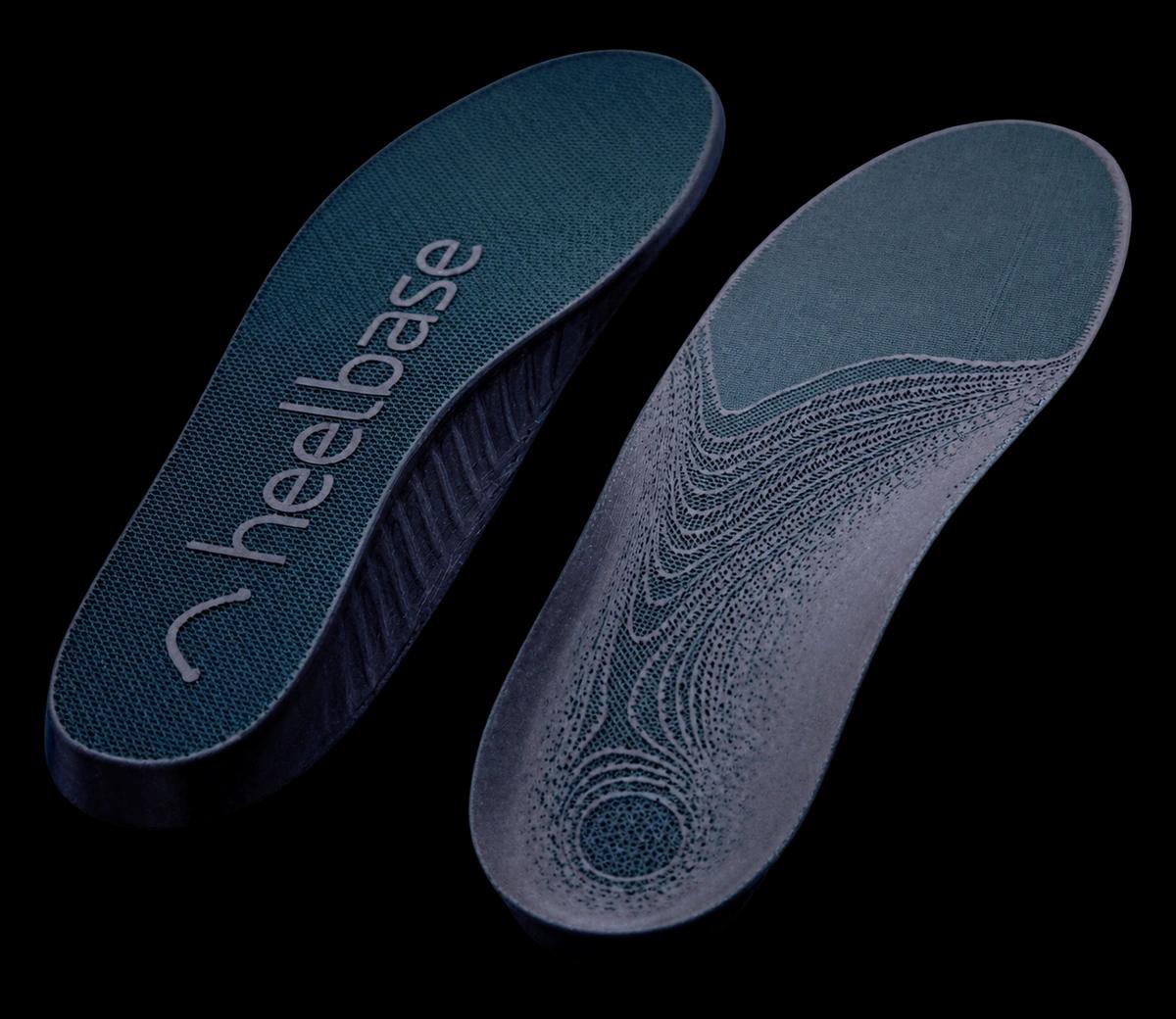
Drive is our own insole, so weigh this section accordingly. Like PowerStep, HeelBase Drive comes in exact sizes and is never trimmed. The difference is the starting point: Drive is designed for the court, 3D-printed as one piece from a single thermoplastic, with a firmer 64 Shore A arch shell and a softer 51 Shore A heel pad.
Its heel cup is 11.3mm deep, its arch cradle is 16mm, and it's sold in nine exact sizes. There are no separate layers to compress or come apart, because the open printed lattice is the whole insole. It suits a player who wants a court-specific build, while PowerStep suits a player who wants a choice of arch heights or a version for a particular foot condition.
HeelBase insoles
Pickleball support starts inside your shoes
HeelBase makes three distinct insoles: a 3D-printed insole for regular court play, a reinforced insole for tournament volume, and a cushioned insole for off-court daily wear.
View HeelBase insolesFrequently Asked Questions
What is the difference between PowerStep Pinnacle and PULSE?
Both use the same firm but flexible polypropylene shell, neutral arch and deep heel cradle. PULSE adds a ShockAbsorb Premium Foam top layer and is designed for athletic walking and running shoes. Pinnacle uses a standard foam top layer, is aimed at walking, work and casual shoes, and comes in low and high arch versions.
Is PowerStep PULSE good for pickleball?
PULSE Performance is a reasonable fit for players with standard arches in athletic court shoes. PowerStep designed it for running, not court sports, so test it with side shuffles and hard stops before a long session. If your court shoe is snug, PULSE Thin takes up less room.
Which PowerStep insole is best for flat feet?
PowerStep makes Pinnacle Low for flat and low-arched feet, with a lower arch shell than the standard model. If your feet also roll inward noticeably, PowerStep offers Maxx versions with a 2 degree medial post. Choose the one that contacts your arch comfortably without pressing into it.
Which PowerStep insole is best for high arches?
Pinnacle High, which has a taller arch shell than the standard Pinnacle. PowerStep positions it for high arches and mild supination. The PULSE line doesn't include a high arch version, so Pinnacle High is the option within PowerStep's range.
Can you trim PowerStep insoles?
PowerStep sells both lines in exact sizes and says no trimming is required. Trimming a sized shell can shift the arch out of position, so if an insole is too long, choose the next size down instead.
Do PowerStep insoles fit wide shoes?
The standard Pinnacle and PULSE models fit widths up to 2E. For wider shoes, PowerStep makes Pinnacle Wide Fit, designed for widths from 3E to 6E.
Which PowerStep insole fits a tight shoe?
PULSE Thin. PowerStep describes it as a lower-profile design for tight-fitting shoes, with the shell moved to the outside, a low, flat heel cradle and a non-slip pad under the heel.
Choose by Your Arch, Then Your Shoe
Pinnacle and PULSE share PowerStep's shell, so let your arch and your shoe decide. Standard arches in athletic court shoes point to PULSE Performance, low or high arches to Pinnacle Low or High, wide feet to Pinnacle Wide Fit, and a snug court shoe to PULSE Thin. Then test the fit with side shuffles before a match.
If you're unsure what your feet need on court, the HeelBase assessment walks you from how you play to the kind of support that suits it.