A custom orthotic is shaped around one foot and often prescribed with everyday shoes in mind. Move it into a pickleball shoe and it meets a different job: hard stops, crossover steps and a lunge to the kitchen line, each of which tries to slide your foot, and the orthotic under it, across the inside of the shoe.
The pickleball shoes that work best with orthotics have a removable insole, enough depth to take the orthotic without lifting your heel, a firm heel counter, a toe box with room to spare, and a width that matches your foot. Always test a shoe with your own orthotics inside, in your court socks.
No single model suits every orthotic, because orthotics vary as much as feet do. Below is the checklist a good fitter works through, how to read a product listing before you order, a ten-minute test you can run in the store, and the sizing calls that trip up most orthotic wearers.
Key Takeaways
- A removable insole comes first, because your orthotic should replace the shoe's liner, not sit on top of it.
- Heel depth decides more than length, since a heel that rides high in the counter slips on every stop.
- Look for a firm heel counter that holds your heel and the orthotic's heel cup together.
- Check width before you size up, because orthotics crowd the forefoot more often than the toes.
- Shop late in the day, wearing your court socks, with your orthotics in your bag.
- Test the shoe with side shuffles and a lunge, not just a walk across the store.
- An orthotic made for walking may not suit court play, so ask whoever prescribed it.
- Give a new shoe and orthotic pairing a few short sessions before a full match.
What Does a Pickleball Shoe Need to Fit an Orthotic?
Start with what the orthotic replaces. Almost every court shoe ships with a removable foam liner, sometimes called a sock liner, lying on the footbed under your foot. A custom orthotic is designed to take that liner's place. Guidance from the American Orthopaedic Foot & Ankle Society describes arch supports going into a shoe after removing the insole, and a prescribed device follows the same rule.
That gives the shoe three jobs. It has to make room for a device that's usually firmer, and often thicker, than the liner it replaces. It has to hold your heel down in the orthotic's heel cup when you stop hard. And it has to give the orthotic a flat, stable platform, so the shape your clinician built stays where it was placed.
Court shoes make each of those jobs harder than a walking shoe does. They're built snug so your foot doesn't slide when you change direction, and plenty of them have a contoured footbed hidden under the liner. If you haven't yet settled the choice between insoles versus custom orthotics, do that first. Everything below assumes you already own a prescribed pair.
It also helps to know which kind of device you have. Full-length orthotics run to the toes and replace the whole liner. Three-quarter devices stop behind the ball of the foot, which leaves the front of the shoe bare once the liner comes out. Both can work in a court shoe, but they fail in different places, and the checks below catch both.
Recovery assessment
Not sure where to begin?
Tell us where you feel discomfort and how often you play. The HeelBase assessment will guide you toward the most relevant support option.
Start the assessmentSix Features That Make a Court Shoe Orthotic-Friendly
Run through these in order. The first two rule shoes out fastest, and you can check most of them before you even lace the shoe.
1. A removable insole
Pull up at the heel of the liner. If it lifts out cleanly, the shoe is a candidate. If it's glued to the footbed, the orthotic has to sit on top of it, which raises your heel, eats the space above your toes and leaves the device resting on soft foam instead of a firm base.
The American Academy of Orthopaedic Surgeons makes the same point about golf, suggesting a shoe with a removable insole so you can add an orthotic, and it warns that orthotic wearers look for a wider-cut brand when a sport's shoes run narrow. Both lessons carry over to the court, where shoes are built close to the foot.
When you're unsure whether a liner is meant to come out, the checks for removing the factory insole take about a minute: look for a seam around the edge, a printed size or logo on the liner, and whether it peels up without tearing.
2. Depth at the heel and over the instep
Most custom orthotics are thicker at the heel than a factory liner, and many have a raised heel cup. That lifts your heel higher in the shoe, closer to the top edge of the heel counter. If the counter is low, your heel sits near its rim and can pop out of the shoe on a backpedal or a split-step landing.
The same extra height shrinks the space over the top of your foot. A shoe with a low instep can press along the lace line once the orthotic is in, even when its length and width are right. With any new shoe, check the heel first and the instep second, before you think about size.
3. A firm heel counter
The heel counter is the reinforced cup that wraps the back of your heel. Squeeze it between your thumb and fingers: it should resist, not fold. A firm counter holds your heel and the orthotic's heel cup together, so the two move as one when you stop. A soft one lets them drift apart, and the device can't do the job it was shaped for.
Pickleball adds a sideways version of the test. Hold the shoe and press the top of the counter inward. If it collapses easily, it won't keep your heel centered over the orthotic on a hard push-off from the sideline.
4. A flat, stable footbed under the liner
With the liner out, look at what's underneath. Some court shoes have a flat footbed. Others have an arch bump or a sculpted heel molded into the midsole itself. A custom orthotic is shaped to sit on a flat surface, and a built-in contour can rock it, tilt it or push its arch higher than your clinician intended.
Press the orthotic into the empty shoe and rock it gently from side to side. It should sit flat, with no gap under the heel or arch and no wobble. If it rocks, that shoe and that orthotic don't match, however well the shoe fits your bare foot.
5. Room above and beside the toes
Even a three-quarter orthotic changes where your forefoot sits, and a full-length device carries its top cover all the way to the toes. The toe box needs room in three directions: length in front of your longest toe, width across the ball of the foot, and height above the toes. Fitting guidance from foot and ankle surgeons asks for a thumb's width in front of the longest toe, at minimum.
Pickleball makes that room more important than it is in a walking shoe. Hard stops at the kitchen line push your foot forward, and a toe box that's already full with an orthotic in it is a familiar route to black toenails after pickleball.
6. A width that fits
Width is where most orthotic wearers come unstuck. An orthotic takes up room along the sides of the shoe as well as underneath, so a standard width that felt fine with the factory liner can pinch once the device goes in. Many court shoes come in at least one wider version, often labeled 2E for men or wide for women.
Pickleball shoe makers have started to cater for this. K-Swiss, for example, sells its Express Light Pickleball in a 2E version that it describes as having a more spacious toe box. Widths aren't standardized between brands, so judge the fit with your orthotic in, not the letter on the box.
| Feature | Why it matters with an orthotic | How to check it |
|---|---|---|
| Removable insole | The orthotic replaces the liner instead of stacking on it | Lift the liner at the heel |
| Heel and instep depth | An orthotic's thicker heel raises your foot in the shoe | Heel stays down, no pressure under the laces |
| Firm heel counter | Holds your heel and the orthotic's heel cup together | Squeeze it, then press the top inward |
| Flat footbed | Lets the orthotic sit without rocking or tilting | Rock the orthotic in the empty shoe |
| Toe room | Hard stops drive the foot forward | About a thumb's width, toes wiggle |
| Width options | Orthotics take room at the sides too | No pinching across the ball of the foot |
How to Read a Shoe Listing Before You Order
Buying online means you can't run the in-store tests until the box arrives, so read the listing for clues first. These phrases tell you most of what you need:
- Removable insole or removable sock liner: the liner should come out, though check the photos as well.
- 2E, 4E, wide or extra wide: the shoe comes in more than one width, so you can fit the orthotic without going longer.
- Accommodates orthotics or orthotic-friendly: the maker expects a device to go in, which usually means some extra depth.
- Low-profile or glove-like fit: a warning sign for a thick orthotic, even when the length suits you.
Then read the return policy before you order. A shoe that looks right on paper can still rock your orthotic or crowd your instep, and a generous return window lets you run the real test at home, on a clean floor, before the shoe ever touches a court.
How Do You Test a Pickleball Shoe With Your Orthotic?
Test shoes when your feet are at their largest, late in the day or after you've played, because feet swell as the day goes on. Wear the socks you play in, since a cushioned court sock takes up noticeably more room than a thin everyday one. Then work through these steps:
- Take the shoe's liner out and put your orthotic in, pushed fully back against the heel.
- Lace the shoe the way you would for a match, firm through the top eyelets.
- Stand still for a minute. Your heel should sit down in the orthotic's heel cup, with no pressure across the instep.
- Walk, then do ten side shuffles each way and a few split-step landings, which load the shoe the way play does.
- Lunge forward as if reaching for a dink, then push back. Watch for heel lift and toes touching the front.
- Take the shoe off and look at the orthotic. If it has shifted sideways or forward, the shoe isn't holding it.
If a shoe passes everything except a little heel slip, lacing can often close the gap. A heel-lock pattern through the top eyelet is the first of several lacing fixes for heel slip, and it costs nothing to try before you rule a shoe out.
Do the whole test with both shoes on, not one. Most people have one foot slightly larger than the other, and orthotics for each foot are often built differently, so a shoe that suits your left foot and left orthotic can still pinch on the right.
Should You Size Up for Orthotics?
Not automatically. Going up half a size adds length you may not need, and spare length lets your foot travel forward on a stop, which works against everything the orthotic is trying to do. Solve the problem where it actually shows up.
If the shoe is tight across the ball of your foot, try its wider version in your usual length. If your toes reach the front with the orthotic in, and only then, go up half a size. If the pressure sits on top of your foot, look for a deeper shoe or try a lacing change before changing the size at all.
| What you feel with the orthotic in | Try this first |
|---|---|
| Pinching across the ball of the foot | The wide or 2E version, same length |
| Toes touching the front on a lunge | Half a size longer |
| Pressure over the instep | A deeper shoe, then a lacing change |
| Heel lifting on stops | A firmer, higher heel counter, then heel-lock lacing |
| The orthotic rocks or tilts | A shoe with a flatter footbed |
The same logic applies to any thicker insert, not just a prescribed one. Most cases of court shoes that feel tight after a new insert come down to volume, not length, which is why a bigger size so often swaps one fit problem for another.
One more sizing trap: don't size a new shoe against the label on your old pair. Brands cut their lasts differently, and the orthotic you wear now may be thicker than the one you had when you bought them. Fit the shoe you're holding to the device you're actually going to wear.
Product spotlight
The first 3D-printed insole for the court
Drive is printed as one continuous piece, engineered to the millimeter, with no glue lines and no bonded foams to separate. An 11.3mm printed heel pocket and shaped arch shell keep load off your plantar fascia through long sessions.
Shop DriveIs Your Everyday Orthotic Right for the Court?
An orthotic made for walking or standing at work isn't always the best device to play in. Specialists at the Hospital for Special Surgery point out that orthotics are very sport specific, and that different sports call for different devices. A high-profile shell that feels fine on a sidewalk can feel very different under a lateral push-off.
If your orthotics were prescribed before you took up pickleball, tell whoever made them how you play now: how often, on what surface, and how much side-to-side movement the game involves. They may adjust your current pair, suggest a lower-profile sports version, or tell you the pair you have is fine. The same HSS guidance notes that even custom orthotics need updating about every two years.
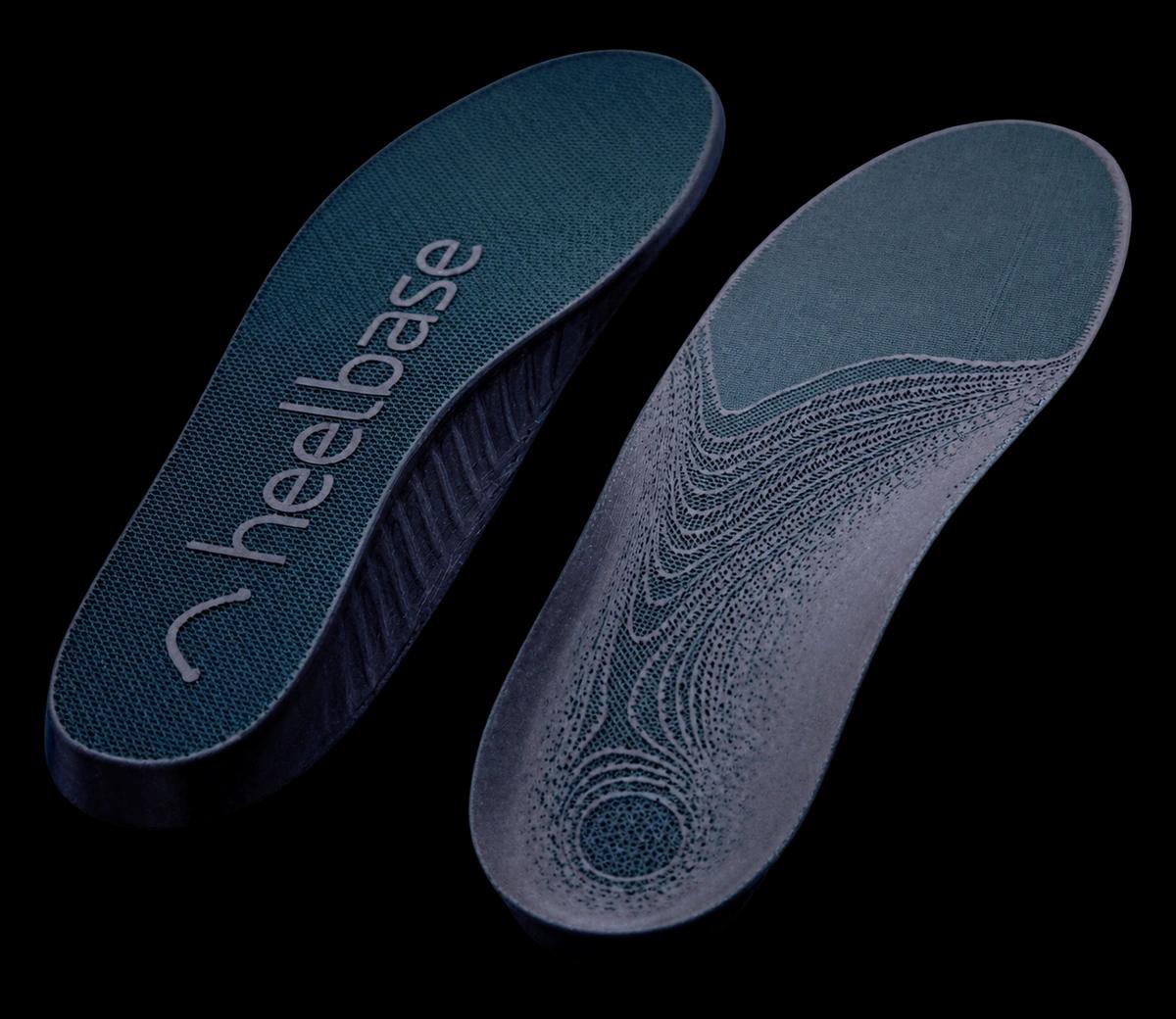
Some players don't have a prescription at all and simply want a court insole, which is a different decision. Our Drive court insole is 3D-printed as one piece in nine exact sizes, with a firmer arch shell and a softer heel pad printed as a single structure, for players who don't need a prescribed device. If you do have one, follow your clinician's advice on when to wear it.
Why the Shoe Still Matters When the Orthotic Is Custom
It's tempting to think a custom device makes the shoe a detail. The research suggests otherwise. In a 2018 randomized trial of 60 adults with plantar heel pain, people given new athletic shoes alone reported less average daily pain at four and 12 weeks than those who stayed in their usual shoes.
Custom orthotics placed in the same new shoes did better again on first-step pain by 12 weeks. The authors noted that earlier orthotic trials hadn't controlled for footwear, so part of what had been credited to the orthotic may have come from the shoe it sat in. The two work as a pair.
For players whose orthotic was prescribed for heel pain, the shoe deserves the same care as the device. The checks for pickleball shoes for plantar fasciitis overlap heavily with this list, with heel security and midfoot stability at the top.
The shoe also wears out first. A court shoe's midsole and heel counter soften with play, and a counter that has started to fold no longer holds your orthotic in place, however good the device is. When the back of the shoe squashes easily between your fingers, replace the shoe before you blame the orthotic.
How to Break In a New Shoe and Orthotic Together
Changing your shoe changes how your orthotic sits, even if the orthotic itself is years old. Give the new pairing a few sessions before you trust it in a long match:
- Wear the shoe with the orthotic around the house or on a walk for a day or two.
- Play a short drilling session before a full evening of games.
- Check your feet afterward for rubbing at the orthotic's edges, new hot spots or numbness.
- Avoid changing shoes in the week before a tournament.
Most orthotic wearers already have someone to ask, and that's the right first call when a shoe change causes a new problem. Knowing when to see a podiatrist about court pain saves weeks of guessing, especially when the trouble started with new equipment.
Keep the old shoes for a few weeks, too. If the new pair causes a problem, going back to a combination you know works is the quickest way to tell whether the shoe or the orthotic is responsible.
HeelBase insoles
Pickleball support starts inside your shoes
HeelBase makes three distinct insoles: a 3D-printed insole for regular court play, a reinforced insole for tournament volume, and a cushioned insole for off-court daily wear.
View HeelBase insolesFrequently Asked Questions
Do pickleball shoes work with custom orthotics?
Yes, most pickleball shoes work with custom orthotics if the factory insole lifts out and the shoe has enough depth and width for the device. Problems usually come from a glued-in liner, a low heel counter or a narrow forefoot, so test any shoe with your own orthotics before you commit to it.
Do I take out the shoe's insole when I wear orthotics?
Yes, in almost every case. A custom orthotic is designed to replace the shoe's removable liner, not sit on top of it. Stacking the two raises your heel in the shoe, crowds your toes and leaves the orthotic on soft foam. Follow your clinician's instructions if they've told you otherwise for a particular device.
Should I size up in pickleball shoes if I wear orthotics?
Usually not. Try the shoe's wide or 2E version in your normal length first, since orthotics take up room across the forefoot more than in front of the toes. Go up half a size only when your toes reach the front of the shoe with the orthotic in, and check heel hold again afterward.
Can I use the same orthotics for pickleball and walking?
Sometimes. An orthotic made for walking or work may be thicker or more rigid than suits side-to-side play. Ask whoever prescribed it whether it suits pickleball, since sports clinicians often build or adjust devices around a sport's movements. Orthotics also wear, and many need updating every couple of years.
Are three-quarter-length orthotics OK in court shoes?
They can be, but they have more room to shift during side-to-side movement, because nothing sits under the front of the foot once the liner is out. Ask whoever made them whether a full-length top cover would suit your play, and watch for movement during side shuffles when you test a shoe.
Do I need to bring my orthotics when I buy pickleball shoes?
Yes. A shoe that fits your foot with its own liner can fit very differently with your orthotic inside, especially at the heel and across the instep. Bring every pair you might play in, plus the socks you play in, and shop late in the day when your feet are at their largest.
How long does it take to get used to new shoes with orthotics?
Most players settle into a new shoe and orthotic pairing within a few sessions if the fit is right. Start with walking and short drilling before full matches. Rubbing, numbness or sharp pain that doesn't ease over those sessions points to a fit problem, not a break-in period, and needs checking with your clinician.
Choose the Shoe Around the Orthotic
Pick the orthotic first and the shoe second. Start with a removable liner and a flat footbed, check that your heel stays down in a firm counter, then judge width before length. Run the shuffle-and-lunge test with your own device inside, and give the pairing a few short sessions before a long day of play.
If you're still working out what should go under your feet, the HeelBase assessment takes about two minutes and asks how you play before it suggests anything. If you already wear a prescribed device, your clinician has the final word on fit.