SOLE sells two footbed lines that look almost identical on the shelf. Active and Performance share the same arch, the same deep heel cup and the same heat-molding process. The difference sits underneath, in the material the base is made from, and it's easy to wonder whether that changes anything once you're sliding into a ball on a hard court.
For most court players, SOLE Active is the better fit. SOLE says the two lines share the same shape and differ only in the base: Active uses durable EVA and suits one pair moved between shoes or footbeds that get soaked, while Performance uses recycled cork for natural materials and warmth.
Below, you'll find what SOLE says about each base, how that plays out in pickleball and tennis, which thickness suits a court shoe, when the Wide or Met Pad versions make sense, and how to fit either line before a long session.
Key Takeaways
- SOLE says Active and Performance share one shape, and only the base material differs between them.
- Active uses an EVA base that SOLE describes as durable and able to withstand high-intensity use.
- Performance uses recycled cork that SOLE calls shock absorbing, insulating, moisture-wicking and quick to mold.
- SOLE recommends Active for one pair swapped between shoes, and for footbeds likely to get soaked.
- For most court shoes, SOLE's Medium thickness suits shoes with standard removable factory liners.
- Pick the thickness before the material, because room inside a court shoe decides more than the base.
- Neither base adds lateral control on its own; that comes from the shoe, the fit and the heel cup.
What's the Difference Between SOLE Active and Performance?
SOLE answers this one directly. In its own words, the only difference between its Active and Performance footbeds is the material used to construct the base. Everything you feel first when you step in, the arch, the heel cup and the overall contour, is the same SOLE shape in both lines.
That shared design includes more than the arch. Both lines are heat- and wear-moldable, both have a moisture-wicking top sheet with Polygiene odor control, and SOLE describes both bases as density mapped, meaning firmer material is placed where SOLE wants more support. Both come in Thin, Medium and Thick, and SOLE also sells Wide and Met Pad versions, though not in every thickness.
So the choice is narrower than it looks. You're not choosing between two kinds of support. You're choosing what sits under that support: a synthetic foam or a natural cork. If you're still deciding between SOLE and a fixed-shape insole, our comparison of SOLE and Superfeet for court sports looks at that bigger choice, including the oven method step by step.
SOLE Active: EVA for Hard Use and Swapping Shoes
EVA, short for ethylene vinyl acetate, is the foam you'll find in most athletic midsoles. SOLE describes it as an incredibly durable and resilient material that can withstand high-intensity use and retains its shape over a long period of time. The brand presents Active as its tried and true line, built around its signature shape for everyday comfort.
SOLE's FAQ gives two clear reasons to choose Active:
- You plan to move one pair of footbeds between different shoes regularly.
- Your footbeds are likely to get soaking wet.
Both apply to plenty of court players. Many people play in one pair of court shoes and train or walk in another, and a summer session on an outdoor court can leave an insole damp with sweat. Rain on an outdoor court does the rest.
We'd add one caution about swapping. A footbed molded inside one shoe can seat differently in another, because the shoes themselves aren't the same shape. If you move a pair around, mold it in the court shoe you play in most, and check that your heel still sits fully back in each shoe you use.
SOLE Performance: Recycled Cork for Warmth and Natural Materials
SOLE builds the Performance base from ReCORK, recycled natural wine corks. It describes cork as environmentally sustainable, naturally shock absorbing and moisture-wicking, and says it molds quickly to your foot. Its FAQ adds that cork is insulating, and SOLE says the Performance base is density mapped for support and natural movement during high-performance activities.
Recovery assessment
Not sure what your feet need on court?
Tell us where you feel discomfort and how often you play. The HeelBase assessment will guide you toward the most relevant support option.
Start the assessmentSOLE's FAQ points Performance at two kinds of player: those who struggle with cold feet on winter days, and those who prefer natural, sustainable materials. For a court player, the first fits early morning sessions on cold outdoor courts. The second is simply a value, and a fair one.
Cork's reputation for bouncing back has some support from materials research. In lab tests of agglomerated cork under repeated impacts, the material showed a strong elastic rebound, with permanent deformation of less than 10% after impact. Those were engineering samples, not footbeds, so read the result as a property of the material rather than proof about any insole.
One practical note: SOLE's FAQ says some shoes squeak when a foam or rubbery material rubs against the bottom of a footbed, and suggests baby powder as a barrier. If a new pair starts squeaking on court, that's the first thing to try.
Does the Base Material Change How You Move?
Less than the marketing might suggest. The parts of a footbed that change how your foot and leg move are the arch and the heel cup, and SOLE uses the same ones in both lines. The base material affects feel, warmth, weight and how the footbed copes with water, but it doesn't add support that the shape doesn't already provide.
Research on insole materials points the same way. In a small 2026 study, runners tested EVA and Sorbothane insoles with two different landing styles. How they landed influenced impact far more than which insole they wore, and the softer material only cut the loading rate for heel strikers. The authors called for larger studies, but the lesson travels: movement shapes load more than foam does.
The arch itself is a different story. When badminton players performed forward lunges, a court movement close to a pickleball reach, arch support insoles in a badminton lunge lowered the loading rate and reduced knee rotation compared with the original insoles. They also raised stress at the kneecap joint. Any new arch support changes how your legs share load, so build up your playing time over a few sessions.
Firmness belongs in the same conversation. In a study of single-leg drop landings, arch pads of different stiffness changed ankle and knee angles, with the stiffest pad lowering the peak ankle load, yet none of them changed the peak force through the ground. It was a small lab study of twelve men, but it suggests a base changes how a landing is shared out more than how hard it is.
SOLE Active vs Performance at a Glance
Here's how the two lines compare on the details SOLE publishes. Where SOLE uses its own wording to describe a material, the table keeps it.
| Feature | SOLE Active | SOLE Performance |
|---|---|---|
| Base material | EVA foam | ReCORK recycled cork |
| Shape | SOLE signature arch and deep heel cup | Same shape as Active |
| Molding | Heat or wear | Heat or wear |
| Thicknesses | Thin, Medium, Thick | Thin, Medium, Thick |
| Other versions | Wide, Met Pad | Wide, Met Pad |
| How SOLE describes the base | Durable, resilient, withstands high-intensity use | Shock absorbing, insulating, moisture-wicking, molds quickly |
| SOLE recommends it for | One pair swapped between shoes; footbeds that get wet | Cold feet; natural, sustainable materials |
Which Is Better for Pickleball and Tennis?
For most players on most courts, Active is the safer pick. Court play is high-intensity by nature, with constant starts, stops and lunges, which is the use SOLE names for EVA. Hot, sweaty outdoor sessions and the occasional wet court line up with SOLE's advice to choose Active when a footbed is likely to get soaked.
Performance makes sense in a few situations:
- You play mostly indoors or in cool weather, and your feet tend to run cold.
- You'd rather use natural and recycled materials, and you're happy to keep your footbeds dry between sessions.
- You'll keep one pair in one court shoe, rather than moving it around.
Tennis and pickleball are close enough that the same reasoning holds for both. The bigger difference between the sports is the court surface and how long you play, which affects thickness and cushioning more than the base. If you play both, the question of whether tennis and pickleball need different insoles comes down mostly to how often you play each one.
Which SOLE Thickness Should You Choose for Court Shoes?
Thickness affects a court shoe more than the base material does, so settle it first. SOLE sorts its three thicknesses by the volume of the shoe:
- Thin: for tight-fitting, low profile footwear with thin or no factory insoles, such as cleats, cycling shoes and slim running shoes.
- Medium: for average-volume footwear with standard removable factory insoles. SOLE lists tennis and basketball shoes here, with 1.6mm of Softec cushioning.
- Thick: for footwear with wiggle room, thick factory insoles and a wider shape, with 3.2mm of Softec cushioning.
Most pickleball shoes are built like tennis shoes, so Medium is the natural starting point in either line. Drop to Thin if your court shoe is cut close around the instep, or if Medium leaves your toes touching the front during a hard stop. Thick suits roomier shoes, but few court shoes have the space.
If a SOLE footbed leaves your shoe pinching across the top, that's a common pattern when a thicker insole replaces a thin liner. The usual fixes for tight court shoes start with lacing and a thinner footbed long before a new pair of shoes.
Product spotlight
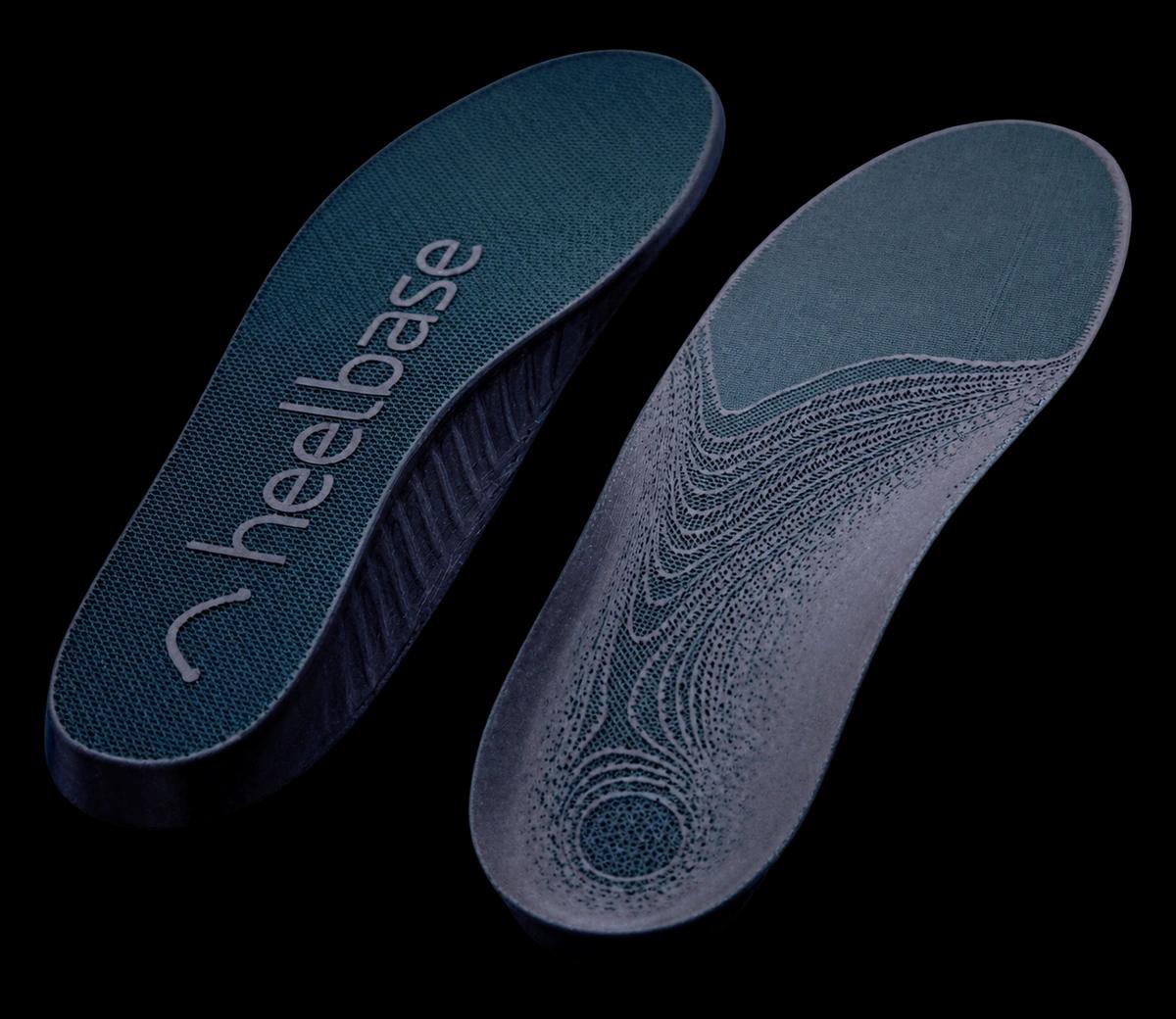
The first 3D-printed insole for the court
Drive is printed as one continuous piece, engineered to the millimeter, with no glue lines and no bonded foams to separate. An 11.3mm printed heel pocket and shaped arch shell keep load off your plantar fascia through long sessions.
Shop DriveShould You Choose the Wide or Met Pad Version?
Wide
SOLE's Wide footbeds have a wider platform, and the brand says they're designed to fit wide and natural splay footwear. If your court shoes are a wide fit, or your forefoot spreads past the edge of a standard footbed, the Wide version keeps the support under your foot rather than under the shoe's sidewall. Players with wide feet can compare more options in our roundup of the best pickleball insoles for wide feet.
Met Pad
SOLE's Met Pad versions add a metatarsal pad, a small raised dome behind the ball of the foot. SOLE describes this as customizable support with a metatarsal pad, and positions it for issues such as Morton's neuroma. A met pad changes how pressure is spread across the forefoot, so it should sit just behind the ball of your foot, not under it.
Forefoot pain in pickleball has several possible causes, and knowing the common patterns of ball of foot pain helps you decide whether a met pad is the right next step. If the pain is sharp, burning or persistent, a podiatrist can tell you what's behind it.
How to Fit Either SOLE Line for Court Play
Active and Performance fit and mold the same way. SOLE doesn't make half sizes, and its FAQ says half-size wearers should round up to the next full size. Run this sequence before your first long session:
- Remove the factory liner from your court shoe and keep it as a template.
- Lay the SOLE footbed on the liner and compare length, heel to heel.
- If it needs shortening, trim only the toe end, as SOLE instructs, and cut a little at a time.
- Mold it with heat following SOLE's oven instructions, or wear it in over a few days of normal activity.
- Play two or three short sessions, then check for rubbing or pressure under the arch.
The trimming step is the one you can't undo, so take it slowly. A careful method for trimming insoles for court shoes uses the factory liner as the outline and checks the fit after every cut.
For heat molding, SOLE gives a short oven method with a firm time limit, and it uses the same process for both lines. Follow its instructions to the letter. If you'd rather skip the oven, SOLE says the footbeds will adapt with wear, usually within a few days.
How Long Do SOLE Footbeds Last on Court?
SOLE doesn't publish a fixed lifespan for either line. Its FAQ says lifespan varies from person to person: some customers wear the same pair for years, while others replace them every six months. Court players who play several times a week will usually sit toward the shorter end.
SOLE suggests replacing a pair when your foot pain returns, or when the top sheet has worn through to the cushioning underneath. Those signs apply to any insole, and the wider signs it's time to replace include a flattened arch and a heel cup that no longer holds its shape.
Care helps either base last. SOLE recommends wiping footbeds with a damp cloth and a mild detergent, letting them air dry, and taking them out of your shoes if they get wet. It also warns against leaving them in high heat for long periods, which rules out a hot car between sessions.
Are SOLE Footbeds Good for Pickleball?
They can be, for the right player. Both lines give you a deep heel cup, a supportive arch and a base that forms to your foot, and SOLE's thickness range makes it easier than with many brands to match a footbed to the room in a court shoe. A footbed that takes your shape also avoids the guesswork of choosing an arch height from a chart.
The limits are worth knowing before you buy:
- SOLE designs its footbeds for general use, not for racquet sports in particular.
- Molding takes care, and the result depends on the stance and the shoe you mold in.
- Whole sizes only, so many players will need to trim the toe end.
- A thick footbed in a snug court shoe can crowd the instep and toes.
If those tradeoffs suit you, either line is a reasonable choice for court play, with Active the default for most. If you'd prefer an insole designed around lateral movement, with a fixed shape and no trimming, a court-specific build is the alternative to look at.
Where Does HeelBase Drive Fit In?
We make Drive, so read this section with that in mind. Both SOLE lines start from a general-purpose shape and ask you to finish the fit with heat, wear and trimming. HeelBase Drive takes a different route: a court insole for pickleball, 3D-printed as one piece from a single thermoplastic, with nothing to mold and nothing to trim.
It pairs a firmer 64 Shore A arch shell with a softer 51 Shore A heel pad, has an 11.3mm heel cup and a 16mm arch cradle, and comes in nine exact sizes. The material is 100% recyclable, which matters to players weighing SOLE's ReCORK story. It suits a player who wants a court build without the molding step, while SOLE suits a player who wants the footbed shaped by their own foot.
HeelBase insoles
Pickleball support starts inside your shoes
HeelBase makes three distinct insoles: a 3D-printed insole for regular court play, a reinforced insole for tournament volume, and a cushioned insole for off-court daily wear.
View HeelBase insolesFrequently Asked Questions
What is the difference between SOLE Active and Performance?
SOLE says the only difference is the material used for the base. Active uses EVA foam, which SOLE describes as durable and able to withstand high-intensity use. Performance uses recycled cork, which SOLE calls shock absorbing, insulating and moisture-wicking. Both share the same arch, heel cup and molding process.
Is SOLE Active or Performance better for pickleball?
Active suits most pickleball players. Court play is high-intensity, sessions can leave footbeds damp, and SOLE recommends Active for footbeds likely to get soaked and for one pair moved between shoes. Performance is a good choice if your feet run cold or you prefer natural, recycled materials.
Is cork or EVA more durable in a SOLE footbed?
SOLE describes EVA as durable, resilient and able to retain its shape over a long period, and describes cork in terms of shock absorption and quick molding. It doesn't give a lifespan for either line, and says lifespan varies from person to person. How often you play and how you care for the footbeds will count for more.
Which SOLE thickness is best for court shoes?
Start with Medium. SOLE recommends it for average-volume footwear with standard removable factory insoles and lists tennis shoes among its examples. Choose Thin if your court shoe is snug around the instep or has a thin or glued-in liner.
Do you have to heat mold SOLE footbeds?
No. SOLE says you can put the footbeds straight into your shoes, and they'll adapt to your feet with wear, usually within a few days. Heat molding is faster. If you use the oven, follow SOLE's time and temperature limits exactly.
Do SOLE footbeds come in half sizes?
No. SOLE's FAQ says half-size wearers should round up to the next full size, then trim the toe end if needed. Trim a little at a time, and compare the footbed with your shoe's factory liner after each cut.
Can you use SOLE footbeds in more than one pair of shoes?
Yes, and SOLE recommends the Active line for that. Mold the pair in the court shoe you play in most, then check that your heel sits fully back in each shoe you use. A footbed shaped in one shoe can seat a little differently in another.
Thickness First, Then the Base
Choose your SOLE thickness from the room inside your court shoe, with Medium as the usual starting point. Then pick the base: Active for hard, sweaty play and shoe swapping, Performance for cold feet and natural materials. Fit it with the factory liner as your guide, and build up your sessions over a week.
If you're not sure what kind of support your feet need on court, the HeelBase assessment takes about two minutes and asks how you play before it suggests anything.