A lot of pickleball players came over from tennis, and plenty still play both. That usually means two pairs of court shoes by the door and one quiet question about what goes inside them: does a sport with a smaller court and an underhand serve need its own insole?
Most players don't need different insoles for tennis and pickleball. Both are hard-court sports built on side-to-side movement, so one court insole with a secure heel cup and a stable arch suits both. A second pair only makes sense when your two pairs of shoes fit differently, or when combined hours wear one pair out fast.
The two sports do load your feet in different ways, and those differences decide which insole features carry the most weight. Below is how each sport works your feet, what stays the same underfoot, how to share one pair between two shoes, and the players who are better off with two.
Key Takeaways
- One court insole usually covers both sports, because both demand heel control and lateral stability on hard courts.
- Tennis adds distance, longer matches and sliding stops, while pickleball concentrates short shuffles near the kitchen line.
- Tennis strokes put more pressure through your dominant foot, so test comfort on that side first.
- Sharing one pair works when both shoes take the insole flat, with the factory liner out of each.
- A trim-to-fit insole cut for one shoe may not suit the other, which is where exact sizing helps.
- Count your hours across both sports, since combined court time is what wears an insole out.
- Players who start pickleball later in life should build volume gradually, whatever goes in their shoes.
How Do Tennis and Pickleball Load Your Feet Differently?
The headline difference is space. A pickleball court is 20 by 44 feet. A tennis court is 78 feet long and 36 feet wide for doubles, so more than three times the area. That one fact shapes almost everything else your feet experience in each sport.
Distance and match length
Tennis asks your feet to cover ground. Players sprint wide for a forehand, recover to the middle, and repeat for hours. A review in the British Journal of Sports Medicine noted that a tennis match often lasts longer than an hour, and in some cases more than five, mixing short maximal efforts with longer stretches of moderate work.
Pickleball points are compact by comparison. Most of the action happens within a few steps of the kitchen line, where you split-step, shuffle a yard or two, lunge for a dink and recover. You cover less distance, but you spend more of each rally on the balls of your feet, making small, sharp corrections.
Doubles narrows the gap. A tennis player who spends most points at the net, volleying and closing short angles, already moves a lot like a pickleball player at the kitchen line. A baseliner who grinds out long singles rallies is the one whose feet notice the biggest change between the two sports.
Recovery assessment
Match your support to the way you play
The 2-minute HeelBase assessment considers your symptoms, playing frequency, and foot history to help narrow down the right insole.
See my matchStops, slides and lunges
Many advanced tennis players slide into shots, even on hard courts. In a 2025 study of 100 elite college players, slide braking on hard courts cut movement time by about 10% for short-distance shots compared with a conventional stop. Sliding moves the foot inside the shoe as well as the shoe across the court, which puts a premium on heel hold.
Pickleball players rarely slide. Their stops are shorter and more frequent, often a quick plant and push-off from one foot after a lateral shuffle. The forward lunge for a low dink adds its own load, driving the foot forward in the shoe and loading the big-toe side of the forefoot.
The serve and the surface
A tennis serve often ends in a jump and a landing on the front foot, repeated dozens of times a match. The pickleball serve is underhand, and the rules require at least one foot on the ground behind the baseline when you strike the ball, so the serve itself puts little load on the foot.
Surface varies more in tennis, too, with clay and grass alongside hard courts, while most pickleball is played on hard outdoor courts or indoor floors.
| Demand on your feet | Tennis | Pickleball |
|---|---|---|
| Court size | 78 x 36 feet (doubles) | 44 x 20 feet |
| Typical movement | Sprints, recovery runs, wide lateral reaches | Split-steps, short shuffles, forward lunges |
| Stopping style | Plant and push, plus slides on many surfaces | Short, frequent plants with little sliding |
| Serve | Often a jump and front-foot landing | Underhand, at least one foot grounded |
| Session length | Matches often over an hour | Shorter games, often several in a row |
| Surfaces | Hard, clay and grass | Mostly hard courts and indoor floors |
What Stays the Same Underfoot?
For all those differences, the job an insole does is close to identical in both sports. Your foot has to stay centered over the shoe while it brakes sideways, your heel has to stay seated when you stop, and your arch has to hold its shape under a push-off that comes from the side, not from behind.
Pressure research in tennis shows how much the movement matters. A 2023 study that measured plantar pressure during groundstrokes with instrumented insoles found the dominant foot carried significantly more pressure than the other in nearly all comparisons, and its authors noted earlier work showing pressure shifts with movement type and court surface.
Pickleball's forward lunge and lateral shuffle load the foot in comparable places: the heel on the plant, the inside of the forefoot on the push-off, and the arch through the turn. An insole that handles one sport's version of those loads will generally handle the other's. The features that do the work are the same in both:
- A heel cup deep enough to keep your heel seated on a hard stop.
- An arch that stays put when you push off sideways, instead of flattening.
- A forefoot that doesn't bottom out on repeated push-offs.
- A top surface that limits sliding between your sock and the insole.
If you want the arch side of that list in more detail, a guide to arch support for court play explains how to judge whether an arch is supporting you or just pushing into your foot.
Can You Move One Insole Between Tennis and Pickleball Shoes?
Usually, yes. Swapping a pair of insoles between two shoes takes about 30 seconds, and for most players it's the simplest answer. It works when both shoes meet three conditions:
- The factory liner comes out of both shoes, so the insole replaces it each time.
- Both shoes are the same length, or close enough that the insole lies flat in each.
- Your heel seats in the insole's heel cup in both shoes, with no lift on a lunge.
The catch is trimming. A trim-to-fit insole gets cut to match one shoe's toe shape, and two brands of court shoe rarely share the same outline. Cut it for your tennis shoes and it may curl or leave a gap in your pickleball pair. The difference between trim-to-fit and exact-size insoles becomes the deciding factor when one pair has to fit two shoes.
If you do share a trimmable pair, use the liner from the shoe with the smaller toe box as your template, then test the insole in the larger shoe before every session for a week. A small gap at the toe is usually fine. Curling, buckling or the heel cup pushed forward isn't.
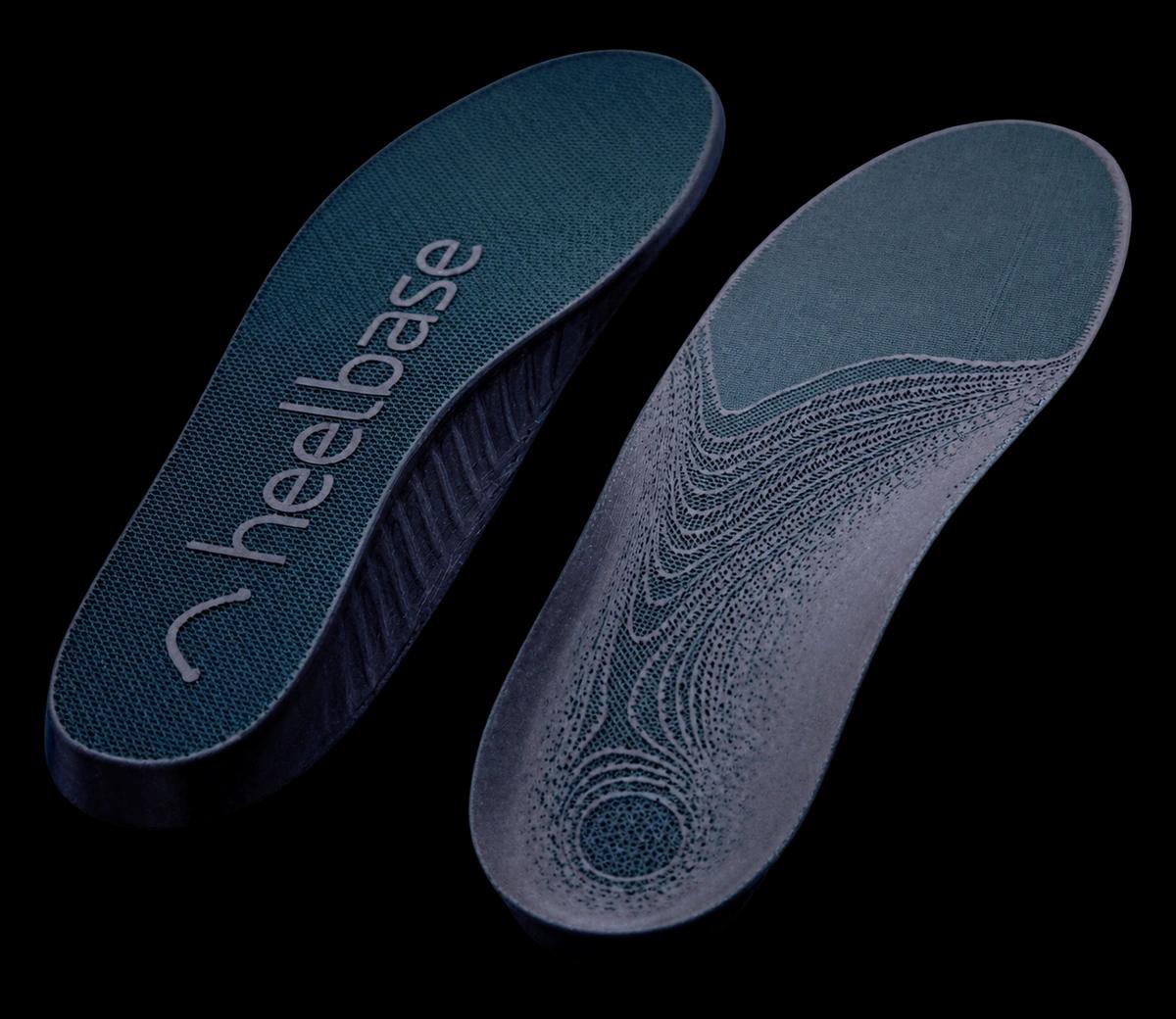
Exact-size insoles sidestep the problem, because nothing gets cut to one shoe. Our Drive court insole is 3D-printed as one piece in nine exact sizes and isn't designed to be trimmed, so the same pair drops into either shoe in your size. At 54.9 grams, it also adds little weight to whichever pair you're wearing.
Keep an eye on fit across the instep as well as length. Tennis shoes and pickleball shoes from different brands can differ in depth, so an insole that sits comfortably in one can press on the top of your foot in the other.
Moving one pair between sports also means it rarely gets a day off. After each session, take the insoles out of the shoes and let them air-dry somewhere open, not zipped in a bag. A pair that goes from a damp tennis shoe straight into a pickleball bag stays damp, and that's when odor and a slippery top surface set in.
Who Actually Needs Two Pairs of Insoles?
A second pair is a convenience for most players and a necessity for a few. You're better off with two if any of these apply:
- Your tennis and pickleball shoes are different sizes or widths, so one insole can't lie flat in both.
- You've trimmed a pair to one shoe and it no longer fits the other cleanly.
- You play both sports on the same day and don't want to swap insoles at the court.
- Your combined hours are high enough that one pair would wear out in a few months.
That last point is the one most dual-sport players overlook. Insoles wear by use, not by the calendar. Most last somewhere around 6 to 12 months of regular play, or roughly 300 to 500 hours. If you play tennis twice a week and pickleball three times, one pair absorbs all of it, and the signs of how long insoles last show up sooner than they would for a single-sport player.
Two pairs split those hours, so each one wears more slowly. They also let you keep one pair packed in each bag, which removes the most common reason players end up on court in the factory liner: forgetting to move the good pair across.
| Your situation | One pair or two? |
|---|---|
| Same shoe size, exact-size insole | One pair, moved between shoes |
| Same size, trim-to-fit insole cut for one shoe | Two pairs, or re-test the fit often |
| Different shoe sizes or widths | Two pairs |
| Both sports on the same day | Two pairs, one per bag |
| Five or more sessions a week combined | Two pairs, to spread the wear |
Product spotlight
Stop sliding around inside your shoes
Drive's printed 11.3mm heel pocket holds your foot in place through shuffle steps and direction changes, while the engineered arch spreads pressure away from the plantar fascia instead of concentrating it.
Shop on-court supportDoes Age or Playing Volume Change the Answer?
It changes the priorities more than the insole. Pickleball draws many players later in life, and injury patterns reflect it. In a review of more than 1,000 surgical Achilles repairs, pickleball-related ruptures occurred at a median age of 60, compared with 45 for tennis, and 82.5% of the pickleball cases were in patients over 50.
The same study described tennis as a sport with similar biomechanics, which is the point. A lifelong tennis player who adds pickleball in their 50s or 60s isn't moving into a gentler sport for the Achilles. If calf or heel-cord tightness is already part of your routine, the warning signs of Achilles pain after pickleball are worth knowing before you add sessions.
Volume counts at any age. A 2026 survey of 383 recreational tournament players found that more weekly playing hours were independently associated with injury, and lower-limb injuries were the most common type. For someone who plays both sports, the number that counts is total weekly court time, not hours in either sport alone.
None of that is a job an insole can do on its own. A good court insole helps your feet stay stable and comfortable through the hours you play. It doesn't replace a warm-up, calf strength or a sensible build-up when you add a second sport to your week.
Do You Need Different Shoes, Even With the Same Insole?
The shoe question is separate from the insole question, and the answer is more often yes. Outsoles are where the sports really diverge. Clay-court tennis shoes use a full herringbone tread built to slide and shed clay, a pattern designed for a different surface from the hard courts most pickleball is played on.
Hard-court tennis shoes and pickleball shoes are much closer. Both are built for lateral movement, with a wide base and a firm heel counter, and many players use one pair for both. What you shouldn't do is play either sport in running shoes, whose soft, tall heels and forward-only design make a sideways plant less stable.
If you use one pair of hard-court shoes for both sports, the insole question disappears, but the shoe now carries every hour you play. Check the outsole and the heel counter more often than a single-sport player would, and replace the shoes on hours played, not on how long you've owned them.
Whatever you wear, the insole only works if the shoe holds your foot. A shoe that has lost its heel counter or its outsole grip undoes most of what a good insole adds, and the habits that help you prevent ankle rolls start with footwear that still grips and still holds.
How to Choose One Insole for Both Sports
If you're buying one pair to cover both, judge it against the harder of the two jobs for each feature. Tennis sets the bar for heel hold and long-session comfort. Pickleball sets it for quick lateral stability and forefoot durability under repeated push-offs.
- Check that the heel cup keeps your heel seated during a side shuffle and a slide-style stop.
- Press the arch with your thumb and confirm it springs back instead of folding flat.
- Look at the forefoot for a layer that won't pack down after a few weeks of push-offs.
- Confirm the insole fits both pairs of shoes, with the liner out of each.
- Test it through a full session in each sport before you call it settled.
If you're torn between two candidates, a ranked court insole comparison can narrow the field, as long as you weigh the criteria that suit both sports, not just pickleball's.
Once it's in use, watch for signs that one insole isn't coping with both sports:
- Your heel slides in the tennis shoe on wide stops, but not in the pickleball pair.
- The ball of your foot burns late in a long tennis match, after starting comfortably.
- Your arches ache on the second day of back-to-back sessions across the two sports.
- The toe end curls or lifts in one shoe after you've moved it across.
One of those on its own usually points to the shoe or the fit in that pair, not the insole. Two or more, especially in both shoes, suggest the insole is worn or isn't the right match for the load you're putting through it.
Off the court is a different job again. If your feet ache after long days on them between sessions, that calls for a cushioned daily-wear insole in your everyday shoes, not a court insole moved into them.
HeelBase insoles
Find the support your game demands
Browse insoles built around pickleball movement and choose the setup that fits your playing volume, intensity, and time between matches.
Shop HeelBase insolesFrequently Asked Questions
Can I use pickleball insoles in tennis shoes?
Yes. A pickleball insole is a court insole, and tennis shoes are court shoes, so the two match well. Take the factory liner out, check that the insole lies flat and your heel seats in its heel cup, and test it through a session. If the insole was trimmed for another shoe, check the toe end fits.
Can I wear tennis shoes for pickleball?
Yes, hard-court tennis shoes work well for pickleball, since both are built for side-to-side movement with a stable base and a firm heel counter. Clay-court tennis shoes are a weaker match for hard pickleball courts because of their herringbone tread. Avoid running shoes for either sport, as their tall, soft heels are less stable when you plant sideways.
Are there insoles designed only for tennis?
Some brands group tennis, pickleball and other racquet sports together, and some sell insoles named for a single sport. The features that matter, a secure heel cup, a stable arch and a durable forefoot, are the same for both sports, so focus on those rather than the sport printed on the box.
Do I need different insoles for clay courts?
Usually not. Clay changes the shoe's outsole, not what your foot needs from the insole. Because players slide more on clay, heel hold matters even more, so make sure your heel stays seated in the heel cup during a slide. Shake the clay grit out of your shoes after play so it doesn't work under the insole.
Should tennis players switching to pickleball change insoles?
Not necessarily. If your current insole fits your new pickleball shoes and still springs back at the arch and heel, keep using it. Replace it if it's worn, if it was trimmed to a different shoe, or if it was built for running instead of court movement.
How often should I replace insoles if I play both sports?
Replace insoles by hours played, not by sport. Most last roughly 300 to 500 hours of court time, so add up your weekly tennis and pickleball sessions together. A flattened arch, a heel pad that no longer springs back or old aches returning are signs it's time.
Is pickleball easier on your feet than tennis?
Pickleball covers less distance, but it isn't automatically easier on the feet. Its short, frequent stops and lunges load the heel and forefoot repeatedly, and it draws many players later in life, which changes injury patterns. How much you play, and how quickly you build up, matters more than which sport you choose.
Are sports insoles better than everyday insoles in court shoes?
For playing, usually yes. A court insole is built to keep your heel seated and your arch stable when you stop and push off sideways, while an everyday insole is built for comfort while walking and standing. Use each where it fits best: the court insole for play, and a cushioned one for long days off the court.
One Good Court Insole, Fitted to Both Shoes
Tennis and pickleball ask different things of your legs, but much the same of the insole under your foot. Choose one with a secure heel cup, a stable arch and a forefoot that holds up, fit it to your larger foot, and make sure it lies flat in both pairs of shoes. Add a second pair when your shoes differ or your combined hours climb.
If you're not sure which insole suits the way you split your week between the two sports, the HeelBase assessment takes about two minutes and starts with how often you play.