Pickleball looks gentle on the knees from the sidelines. Then you count the movements: split steps, short sprints to the kitchen, hard stops, wide lunges for a dink, and constant bending in the ready position. By the end of a long session, the knees have absorbed far more than a casual game suggests.
Knee pain after pickleball usually comes from the knee itself, from overuse, a twist or an older problem, but your feet can add to it. When the arch drops or the foot rolls inward on lunges and stops, the shin rotates and the knee can take more strain. Supportive shoes and insoles can help with that part.
Below, you'll find how common knee pain is in pickleball, what different kinds of knee pain tend to mean, how your feet fit in, a simple check to see whether an insole helps, and the signs that mean you should get your knee looked at.
Key Takeaways
- The knee is one of the most frequently injured areas in pickleball, in clinic and player studies alike.
- Pain at the front of the knee, around the kneecap, is a common overuse pattern in court sports.
- Feet can add to knee strain when the arch drops or the foot rolls inward under load.
- Insoles can ease front-of-knee pain for some people in the short term, but not for everyone.
- A single-leg squat with and without an insole is a quick way to check whether support helps you.
- Playing more hours each week was linked to more injuries, so how much you play counts too.
- Swelling, locking, giving way or pain after a twist needs a clinician, not an insole.
How Common Is Knee Pain in Pickleball?
More common than many players expect. When one academic medical center reviewed 164 pickleball injuries seen over five years, the knee was the largest single group, with 52 cases. Medial meniscus tears, damage to the cartilage on the inside of the knee, made up nearly half of those knee injuries.
Recreational players report a similar picture. In a survey of 383 tournament players in South Korea, about two in five said they'd had a pickleball injury in the past year, and the knee was the most frequent site. Just over half of the injuries came on gradually through overuse rather than from a single incident.
The same survey found that players who spent more hours on court each week were more likely to report an injury, with the odds rising for every extra weekly hour. That doesn't mean playing is bad for your knees. It means volume is part of the story, especially when you ramp it up quickly.
What Causes Knee Pain After Pickleball?
Where the pain sits is the most useful clue. These are common patterns in court sports, not diagnoses, and more than one can overlap.
Pain at the front of the knee
An ache around or behind the kneecap, often worse on stairs, when squatting, or after sitting for a while, is the classic pattern of patellofemoral pain. It tends to build with repeated bending under load, which is exactly what the ready position, split steps and lunges ask of you. This is the type of knee pain most closely studied alongside foot mechanics.
Pain on the inside of the knee
Pain along the inner joint line can come from irritation of the inner knee structures, from wear in older knees, or from a meniscus problem. A meniscus tear often follows a twist on a planted foot, and may bring swelling, catching or a feeling that the knee locks. That kind of pain needs a proper assessment.
Pain on the outside of the knee
Pain on the outer side of the knee can come from the soft tissues that run down the outside of the thigh and attach near the knee, especially after a jump in playing time. Players whose feet roll outward, or who land stiffly, sometimes notice it more.
Pain behind the knee or general stiffness
A tight, achy feeling behind the knee or all-over stiffness the morning after is common in older players and in knees with some wear. It often eases as you warm up, which is a reason to warm up properly rather than a reason to ignore it.
Recovery assessment
Wondering whether your feet play a part?
Tell us where you feel discomfort and how often you play. The HeelBase assessment will guide you toward the most relevant support option.
Start the assessmentWhich Pickleball Movements Load the Knee Most?
Not every part of a rally is equal. A few movements account for most of the strain your knees take on court:
- The ready position. Holding a bent-knee crouch at the kitchen line keeps the muscles around the kneecap working for long stretches.
- Split step landings. Each small hop lands on bent knees, dozens of times a game.
- Lunges for wide dinks. A deep lunge bends the front knee under your full weight, which loads the joint behind the kneecap.
- Hard stops at the kitchen line. Decelerating from a sprint asks the thigh muscles to brake through a bent knee.
- Pivots on a planted foot. Turning while the shoe grips the court twists the knee, which is the classic setting for a meniscus injury.
Your foot is the contact point in every one of these. If it slides inside the shoe, rolls inward on landing or lets the heel lift, the knee above it has less stable ground to work from. That's the practical link between feet and knees on court. The shin sits between the two, and a larger arch drop is also linked with shin splints, so checking your feet makes sense for both.
Can Your Feet Cause Knee Pain?
They can contribute. Your foot, shin and knee work as a chain. When your arch flattens and your foot rolls inward under load, your shin bone rotates inward with it, and that rotation reaches the knee. On a lunge or a hard stop, that can change how the kneecap tracks and where the knee takes its load.
Research on front-of-knee pain supports a link, with caveats. A 2026 review of 42 studies found that people with patellofemoral pain showed greater drop in the arch than people without it, measured as how far the midfoot sinks when standing. Other foot measures, including overall foot posture and plantar pressure, showed no clear difference, and the studies couldn't show that the feet caused the pain.
So the honest answer is that feet are one factor among several, and a bigger factor for some people than others. Players with low arches or feet that roll in noticeably have the most reason to look at their feet.
The signs of overpronation in pickleball are easy to check at home, starting with the wear pattern on an old pair of shoes. Look for heavy wear along the inner edge of the sole and a heel counter that leans inward.
High arches can matter in a different way. A rigid, high-arched foot tends to absorb less shock and loads the outside edge, so more of each landing travels up the leg. Cushioning and arch contact usually help that foot type more than control does, a pattern common among players with high arches and foot pain.
Pain in one knee only is a useful clue. Compare your feet standing barefoot: if one arch sits visibly lower, or one shoe shows more wear along the inner edge, the foot on the sore side deserves a closer look. Your playing side counts too, since most players lunge and push off more often on one leg than the other.
Knee Pain by Location: What It Might Mean
This table pulls the patterns together. Use it to decide what to watch and when to get help, not to diagnose yourself.
| Where it hurts | Common pattern | Can feet play a part? | Get it checked if |
|---|---|---|---|
| Front, around the kneecap | Ache on stairs, squats, after sitting | Often, through arch drop and inward roll | It persists beyond a few weeks |
| Inside of the knee | Joint line pain, sometimes after a twist | Sometimes | Swelling, catching or locking |
| Outside of the knee | Ache after more playing time | Sometimes, with outward rolling | It keeps returning |
| Behind or all over | Stiffness, worse in the morning | Less often | Swelling, heat or night pain |
Do Insoles Help Knee Pain From Pickleball?
For front-of-knee pain, they can. An international consensus statement on patellofemoral pain recommends foot orthoses for short-term pain relief, alongside exercise therapy that targets the hips and knees. The same statement adds an important caution: the average improvement is modest, and people respond very differently, so orthoses won't help everyone.
The researchers also noted who tends to respond. People with a more mobile midfoot, people with less ankle flexibility, and people whose pain eased right away during a single-leg squat with the orthoses in place were more likely to benefit. That last clue is one you can check yourself, in the next section.
Support also comes with a tradeoff. When badminton players lunged in arch support insoles, the insoles lowered loading and knee rotation compared with the original insoles, but raised stress at the kneecap joint. A new insole changes how your knee shares load, which is why it pays to build up gradually rather than jump straight into a long session.
What to look for in an insole for knee-related foot issues is simple: a heel cup that holds the heel centered, and an arch that contacts your foot along its length without pressing into it. The basics of choosing arch support for pickleball apply here just as they do for foot pain.
The Single-Leg Squat Check
This takes two minutes and tells you whether foot support changes your knee pain. Do it in your court shoes, on a firm floor, and stop if the pain is sharp.
- Stand on the sore leg, holding a wall or chair lightly for balance.
- Bend the knee slowly into a shallow squat, about a quarter of the way down, then stand back up.
- Do five, and note the pain on a scale of 0 to 10. Watch whether your knee drifts inward past your big toe.
- Put an arch-supporting insole in the shoe, or swap to one you already own.
- Repeat the five squats and score the pain again.
If the pain drops noticeably and your knee tracks straighter, foot support is likely to be part of the answer for you. If nothing changes, the cause probably sits elsewhere, in the knee itself, the hip or your training load, and an insole alone is unlikely to settle it.
Product spotlight
The first 3D-printed insole for the court
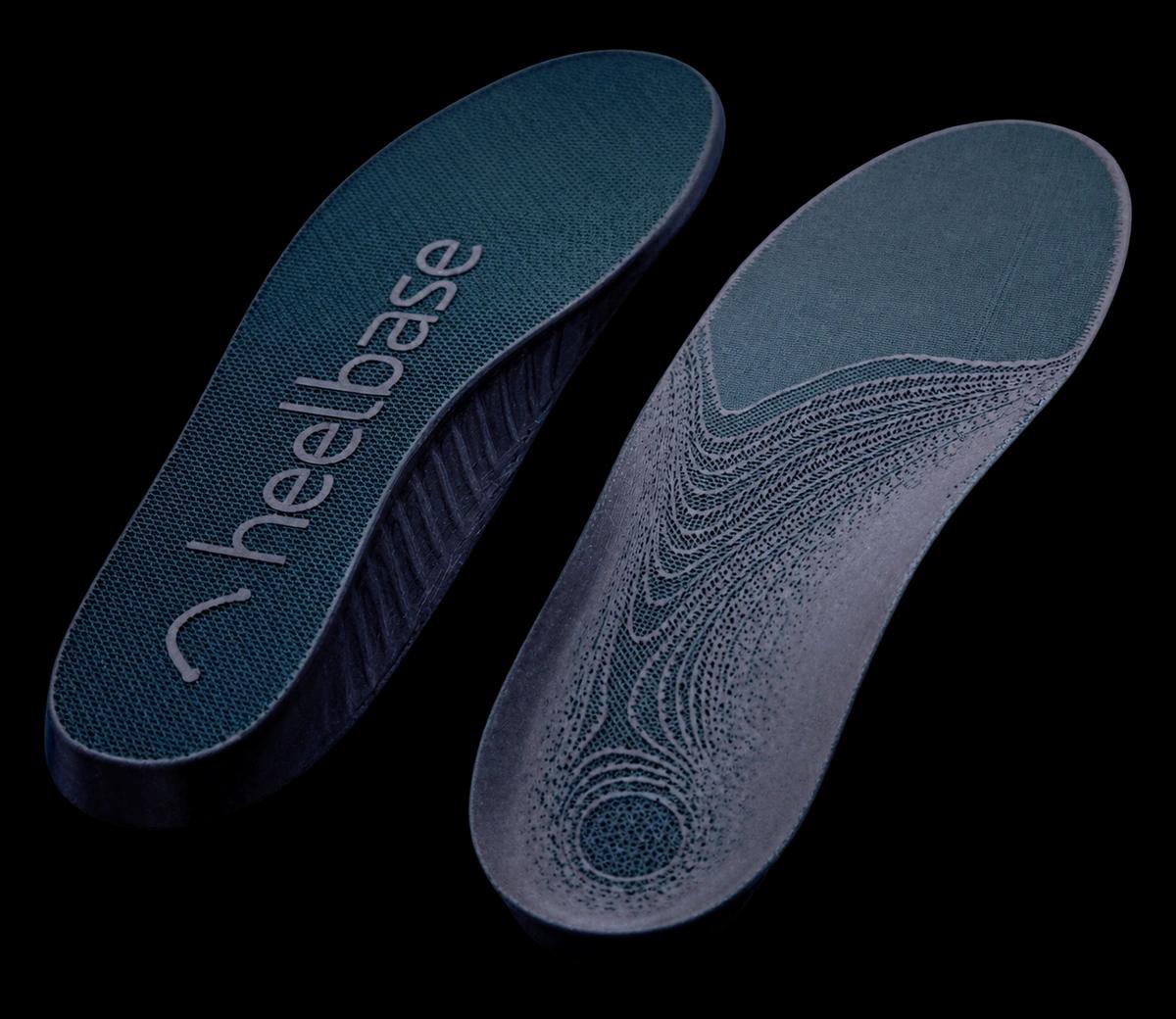
Drive is printed as one continuous piece, engineered to the millimeter, with no glue lines and no bonded foams to separate. An 11.3mm printed heel pocket and shaped arch shell keep load off your plantar fascia through long sessions.
Shop DriveDo Your Shoes Matter for Knee Pain?
Yes, in two ways. First, court shoes are built to keep your foot stable during lateral movement, with a flatter, wider base than running shoes. Playing in running shoes, with their higher, softer heels, gives your foot more room to tip and roll during side-to-side play.
Second, shoes wear out, and the parts that keep your foot stable go first. A compressed midsole or a heel counter that has softened lets your foot roll more on every landing. Knee pain that creeps in months after you bought your shoes is a prompt to check for worn-out shoes, starting with the outsole and the heel counter.
Whatever shoe you play in, fit it with the insole you'll use, and make sure your heel sits firmly in the back of the shoe. A heel that slips lets the foot move independently of the shoe, which undoes much of what a supportive shoe offers.
What Else Helps Knee Pain From Pickleball?
Feet and shoes are one piece. These habits address the rest:
- Warm up before you play. A few minutes of movement prepares your knees for split steps and lunges, and a short routine of foot and ankle warm-ups gets the lower leg ready too.
- Build playing time gradually. Add sessions or hours a little at a time, especially after a break.
- Strengthen your hips and thighs. Exercise for the hip and knee muscles is one of the best-supported approaches to front-of-knee pain.
- Use soft knees on landings. Land from your split step with bent knees, and avoid locking the leg when you stop.
- Shorten the deepest lunges. Take an extra step to the ball rather than reaching into a very deep lunge when your knee is sore.
- Leave a rest day between hard sessions when your knee is grumbling.
Older players have extra reasons to manage load carefully, since knees with some wear tend to react to sudden increases. Many of the adjustments that ease foot pain in players over 55 help the knees as well.
How Long Does Knee Pain After Pickleball Last?
It depends on the cause. A mild ache after an unusually long or intense session often settles within a day or two of rest. Front-of-knee overuse pain tends to come and go with your playing load, easing when you cut back and returning when you ramp up quickly.
Pain that lingers for more than a couple of weeks, keeps coming back, or gets worse each time you play deserves an assessment, even if it never started with an injury. So does any pain that changes how you move, such as favoring one leg or avoiding lunges, because compensating tends to shift strain somewhere else.
While it settles, you don't always have to stop playing completely. Shorter sessions, fewer games in a row, and avoiding the deepest lunges let many players stay active. If pain rises during play or is worse the next morning, that's your signal to back off further.
When Should You See Someone About Knee Pain?
Most overuse aches settle with rest, a lighter schedule and a few changes. Some signs point to something that needs a proper assessment before you play again:
- Swelling that appears within hours of a twist or a fall.
- A pop at the time of injury, or a knee that gives way.
- Catching or locking, where the knee gets stuck and won't straighten.
- Pain that stops you bearing weight or fully bending or straightening the knee.
- Pain that keeps getting worse, wakes you at night, or lasts beyond a few weeks.
- Redness, heat or fever along with knee pain.
A sports medicine doctor or physical therapist is the right first stop for the knee. If they suspect your feet are part of the problem, a podiatrist can assess your foot mechanics, and knowing when to involve a podiatrist helps you get the order right.
Where Does HeelBase Fit In?
We make insoles, not knee remedies, so we'll keep this short. An insole won't change what's happening inside the knee itself, and we'd never suggest one replaces an assessment for the warning signs above. What support can do is steady the foot at the bottom of the chain, which is the part of knee strain that starts in your shoes.
If your single-leg squat check suggests foot support helps, HeelBase Drive is our court insole for regular play. It's 3D-printed as one piece, with an 11.3mm heel cup to hold the heel centered and a 16mm arch cradle that contacts the arch along its length.
HeelBase insoles
Pickleball support starts inside your shoes
HeelBase makes three distinct insoles: a 3D-printed insole for regular court play, a reinforced insole for tournament volume, and a cushioned insole for off-court daily wear.
View HeelBase insolesFrequently Asked Questions
Why do my knees hurt after playing pickleball?
Pickleball loads the knees with constant bending, lunges and hard stops. Common causes include overuse around the kneecap, irritation on the inside or outside of the knee, a meniscus problem after a twist, and wear in older knees. Your feet, shoes and weekly playing time can all add to the strain.
Can flat feet cause knee pain in pickleball?
They can contribute. When the arch drops and the foot rolls inward, the shin rotates and the knee can take more strain. Research links greater arch drop with front-of-knee pain, but it can't show cause and effect, so flat feet are one factor among several.
Do insoles help knee pain?
For front-of-knee pain, foot orthoses are recommended for short-term pain relief, but results vary a lot between people. A quick single-leg squat with and without an insole shows whether support makes a difference for you. Insoles won't fix knee pain caused by a twist or joint damage.
Is it OK to play pickleball with knee pain?
A mild overuse ache that eases as you warm up and settles afterward is usually manageable with a lighter schedule. Stop and get assessed if you have swelling, locking, giving way, sharp pain or pain that's getting worse, especially after a twist or a pop.
What shoes are best for knee pain in pickleball?
Court shoes with a stable, fairly flat base and a firm heel counter, fitted so your heel doesn't slip. Avoid playing in running shoes, which sit higher and softer and let the foot roll more during lateral movement. Replace shoes once the midsole or heel counter has worn down.
How long does knee pain after pickleball last?
A mild ache after a long or intense session often settles within a day or two. Overuse pain at the front of the knee tends to rise and fall with how much you play. Pain that lasts beyond a couple of weeks, keeps returning or gets worse each session should be assessed.
Should I wear a knee brace for pickleball?
A brace can feel reassuring, but the right one depends on the cause of your pain. Ask a sports medicine doctor or physical therapist before you rely on one, particularly after an injury, so the brace suits what's actually going on in the knee.
Start With the Knee, Then Check the Feet
Knee pain after pickleball is common, and most of it comes from load and the knee itself. Your feet can add to it, especially if your arches drop or your feet roll in. Rule out the warning signs first, then try the single-leg squat check, look at your shoes, and build your playing time gradually.
If your feet do seem to be part of the picture, the HeelBase assessment helps you work out what kind of support suits the way you play.