You finish a long session, untie your shoes, and the top of your foot is sore right where the laces cross. Sometimes it fades within an hour. Sometimes it's still there the next morning, or it starts to burn and tingle toward your toes. The top of the foot has very little padding, so it complains quickly when something presses on it.
Top of foot pain after pickleball usually comes from pressure over the instep: laces pulled tight to lock the heel, or an insole that lifts your foot into the shoe's upper. Less often it's an irritated tendon, a pinched nerve or a stress fracture, and where it hurts helps you tell them apart.
This page focuses on finding the cause. You'll find the six most common ones, a symptom table, a quick fit check you can do in your court shoes, and the warning signs that mean you should stop playing and get it checked.
Key Takeaways
- Lace pressure across the instep is the most common cause of top of foot pain on court.
- An insole stacked on the factory liner can push your foot up into the shoe's upper.
- Burning or tingling between the big toe and second toe can mean a compressed nerve.
- Pain at one spot on the bone that worsens with play needs checking for a stress fracture.
- Loosening or skipping one eyelet often relieves pressure without losing your heel lock.
- High arches, new shoes and sudden jumps in court time all raise the odds of instep pain.
- A stiff, achy midfoot in an older player may be arthritis, which responds to footwear changes and support.
Why Does the Top of My Foot Hurt After Pickleball?
The top of your foot is a crowded place. Tendons that lift your toes run just under the skin, along with a nerve and blood vessels, all sitting over the small bones of the midfoot. There's very little fat or muscle to cushion them, and the laces of your shoe sit directly on top.
Pickleball adds two things. First, players lace tightly to keep the heel locked during lateral shuffles, which concentrates pressure across the instep. Second, your feet swell over a long session, so a shoe that felt fine at the first serve can feel tight by the third game. Pressure that was tolerable early becomes painful late.
Most top of foot pain on court is mechanical and settles once you take the pressure away. The causes below run roughly from most to least common.
What Are the Most Common Causes?
1. Lace Pressure Across the Instep
If the soreness sits in a line or patch right under the laces and eases soon after you untie your shoes, lace pressure is the likely cause. It's especially common when you tie the top eyelets hardest to hold the heel, or when a thin tongue lets the laces dig in.
Pressure under laces also changes during play. In a 2026 study of runners, conventional laces produced bigger swings in pressure on top of the foot than a dial-based closure, and they loosened during 10% of the trials. If you retie mid-session, it's easy to pull them tighter than before.
2. Not Enough Room Over the Foot
An insole takes up space. If you add one on top of your shoe's factory liner, or swap to a thicker one, your foot sits higher and the upper presses down harder over the instep. The same happens with a high-volume foot in a low-profile court shoe. Pain from this tends to build steadily through a session.
The fix is usually to take the factory liner out instead of stacking two layers, then recheck the fit. If the shoe still feels crowded with the new insole alone, work through the usual fixes for tight court shoes with insoles before you blame the insole itself.
Recovery assessment
Want help matching your insole to your shoe?
Tell us about your feet, your court shoes and where things feel tight. The HeelBase assessment suggests the support that suits your fit.
Start the assessment3. Irritated Extensor Tendons
The extensor tendons run over the top of the foot to lift your toes and ankle. Constant pressure from laces, or a lot of push-offs in a new shoe, can irritate them. The ache usually follows the line of a tendon toward the toes and gets worse when you pull your toes up against resistance.
This tends to come on after a jump in playing time or a change of shoes, and it settles with less pressure and less load. Easing the laces over the sore line, cutting session length for a week or two, and gentle calf and ankle mobility work are a sensible start.
4. A Compressed Nerve
A nerve called the deep peroneal nerve crosses the top of the foot under the laces and supplies feeling to the skin between your big toe and second toe. A 2025 review of nerve entrapment in the foot lists tight shoelaces, poorly fitting shoes, high arches and repeated ankle sprains among the things that can compress it.
The clue is the feeling, not just the location. Burning, tingling or numbness in the web space between the first two toes, often worse during play and sometimes at night, points toward the nerve instead of a tendon. Taking lace pressure off the area is the first step, and symptoms that persist deserve an assessment.
5. A Stress Fracture
Repeated loading can cause tiny cracks in the bones of the midfoot, most often in the long metatarsal bones. The warning signs are pain at one spot you can press with a fingertip, swelling on top of the foot, and pain that builds with each session instead of easing as you warm up.
One bone deserves a special mention. The navicular sits at the top of the arch, and a 2025 review of navicular stress fractures describes vague, activity-related midfoot pain with tenderness on top of the bone, and notes that early X-rays often look normal. That combination makes these fractures easy to miss without proper imaging.
6. Midfoot Arthritis in Older Players
In players over 50, a stiff, aching midfoot with a bony bump on top can point to arthritis in the midfoot joints. The bump often rubs against the laces, so shoe pressure and joint pain add together, and the foot may feel worst first thing in the morning or after sitting.
It's usually managed rather than fixed. In a survey of Australian podiatrists, almost all used footwear advice for midfoot arthritis, and most also used orthoses, alongside taping and exercise. For court play, that means roomy shoes, lacing that avoids the bump, and support that limits how much the midfoot bends.
How Can You Tell a Tendon Problem From a Bone Problem?
Two simple observations help. Tendon pain follows a line and changes with movement: it's worse when you lift your toes against resistance or point the foot, and it often eases once you're warm. Bone pain sits at a point. Pressing on one spot reproduces it, it tends to build with each session, and it often aches afterward at rest.
Swelling is less useful on its own, because both can cause it. The trend tells you more. Tendon irritation usually improves within a week or two once pressure and load come down. A bone problem keeps hurting at the same spot despite those changes, which is the point to stop guessing and get it imaged.
Top of Foot Pain by Symptom
Use this table to narrow down the likely cause and the first thing to try. It's a guide, not a diagnosis.
| What you notice | Likely cause | First thing to try | Get it checked if |
|---|---|---|---|
| Sore line under the laces that fades after untying | Lace pressure | Skip the eyelet over the sore spot | It lasts into the next day |
| Pressure that builds through a session | Not enough room over the foot | Remove the factory liner under your insole | Swelling stays after play |
| Ache along a tendon, worse lifting the toes | Irritated extensor tendon | Ease lace pressure and shorten sessions | No better after two weeks |
| Burning or tingling between the first two toes | Compressed nerve | Take all pressure off the area | Numbness or weakness persists |
| Pain at one spot that worsens with play | Possible stress fracture | Stop playing | Straight away |
| Stiff midfoot with a bony bump on top | Midfoot arthritis | Roomier shoes and lacing around the bump | Pain limits walking |
A Quick Lace and Fit Check
Do this in the shoes and insoles you play in, wearing the socks you use on court.
- Unlace the shoe fully and check what's under your insole. If the factory liner is still there, take it out.
- Lace up again, snug at the bottom and middle, and tie the top eyelets only firmly enough to hold your heel.
- Press along the top of your foot through the tongue. If one spot is tender, skip the eyelet pair directly over it.
- Stand, then do a few side shuffles. Your heel should stay down without the laces biting.
- Check that the tongue lies flat and centered. A twisted or bunched tongue can create its own pressure line.
If that doesn't settle it, a few lacing patterns for pickleball relieve the instep while still holding the heel, including window lacing around a sore spot and a heel lock that lets you loosen the middle eyelets.
Does Your Insole Play a Part?
It can, and the most common mistake is an easy one to make. Most full-length insoles are designed to replace the factory liner, not sit on top of it, yet many players drop the new insole in over the old one. That extra layer lifts the foot toward the laces, so removing factory insoles first is the simplest fix.
Thickness varies a lot between insoles. A thick, heavily cushioned insole may suit a roomy walking shoe but crowd a close-fitting court shoe. If you switch insoles and top of foot pain starts soon after, the new one is the first suspect, even if it feels great under the arch.
Arch shape counts too. A high arch sits taller in the shoe, so the instep is already close to the laces before any insole goes in. Players with high arches and instep pressure often do best with an insole that supports the arch without adding much height under it.
Why Is It Worse in New Shoes?
New court shoes often have stiffer uppers and tongues that haven't yet shaped themselves to your foot. The material across the instep is at its least forgiving, and the laces haven't settled. That's why instep soreness often appears in the first few sessions and then fades.
Give new shoes a few shorter sessions before a long day on court, and lace them a little looser than feels natural at first. If the pressure hasn't eased after four or five wears, the shoe may simply be too low over the instep for your foot.
Can an Old Ankle Sprain Play a Part?
It can. Repeated ankle sprains are one of the factors linked with compression of the nerve that crosses the top of the foot, and a loose ankle also tempts you to lace tighter to feel secure. That combination puts more pressure across the instep exactly where the nerve and tendons sit.
If you lace hard because your ankle feels unstable, work on the ankle itself instead of the laces. Balance and strength drills for preventing ankle rolls build stability in the muscles, so the laces don't have to do all the work.
Product spotlight
The first 3D-printed insole for the court
Drive is printed as one continuous piece, engineered to the millimeter, with no glue lines and no bonded foams to separate. An 11.3mm printed heel pocket and shaped arch shell keep load off your plantar fascia through long sessions.
Shop DriveWhich Court Shoes Are Kinder to the Instep?
If top of foot pain keeps coming back, look at the shoe's upper as closely as its sole. A few features make a real difference:
- A padded tongue that spreads lace pressure instead of letting the laces bite.
- A gusseted tongue, stitched to the sides, which stays centered and flat.
- Plenty of eyelets, so you can skip or loosen pairs without losing the heel lock.
- A higher-volume toe box and instep, or a wide version if the brand makes one.
Try shoes on later in the day, when your feet are at their largest, and with the insole you plan to use. A shoe that only fits once the laces are cranked down is too small over the instep, whatever the length says.
Is Numbness in Your Toes Related?
Often, yes. Lace pressure and a crowded shoe can affect the nerves that run to the toes as well as the tendons on top. If your toes burn or go numb along with instep pain, the same pressure is usually behind both, and easing it for burning or numb toes tends to relieve the instep at the same time.
How to Get Back on Court With Top of Foot Pain
For lace pressure and tendon irritation, most players can keep playing once the pressure is off. Give the foot a few lighter days, change the lacing or insole setup, then return to normal sessions over a week or two. If the ache returns at the same spot, look again at the setup before adding court time.
Ice for 10 to 15 minutes after play can calm a sore instep. Avoid strapping the foot tightly, or wearing socks with a thick seam over the sore area, since both add the kind of pressure you're trying to remove. While the foot settles, cycling or swimming keeps your fitness up with far less load on the instep.
A suspected stress fracture is different. Don't test it by playing through. Bone that has been overloaded needs time without that load, and a clinician can tell you how long based on the bone involved.
When Should You See Someone About Top of Foot Pain?
Get the foot examined if you notice any of these:
- Pain at one spot on a bone, especially with swelling.
- Pain that's worse each session, or present when you rest.
- Numbness, tingling or weakness lifting your toes that doesn't fade once your shoes are off.
- Bruising or a pop after landing awkwardly or being stepped on.
- Redness, heat or swelling across the top of the foot without an obvious cause.
- No improvement after two weeks of easing pressure and load.
A sports medicine doctor or podiatrist can examine the foot and arrange imaging if needed. If insoles turn out to be part of the answer, a podiatrist's view on insoles can save you from guessing between models.
Where Does Drive Fit In?
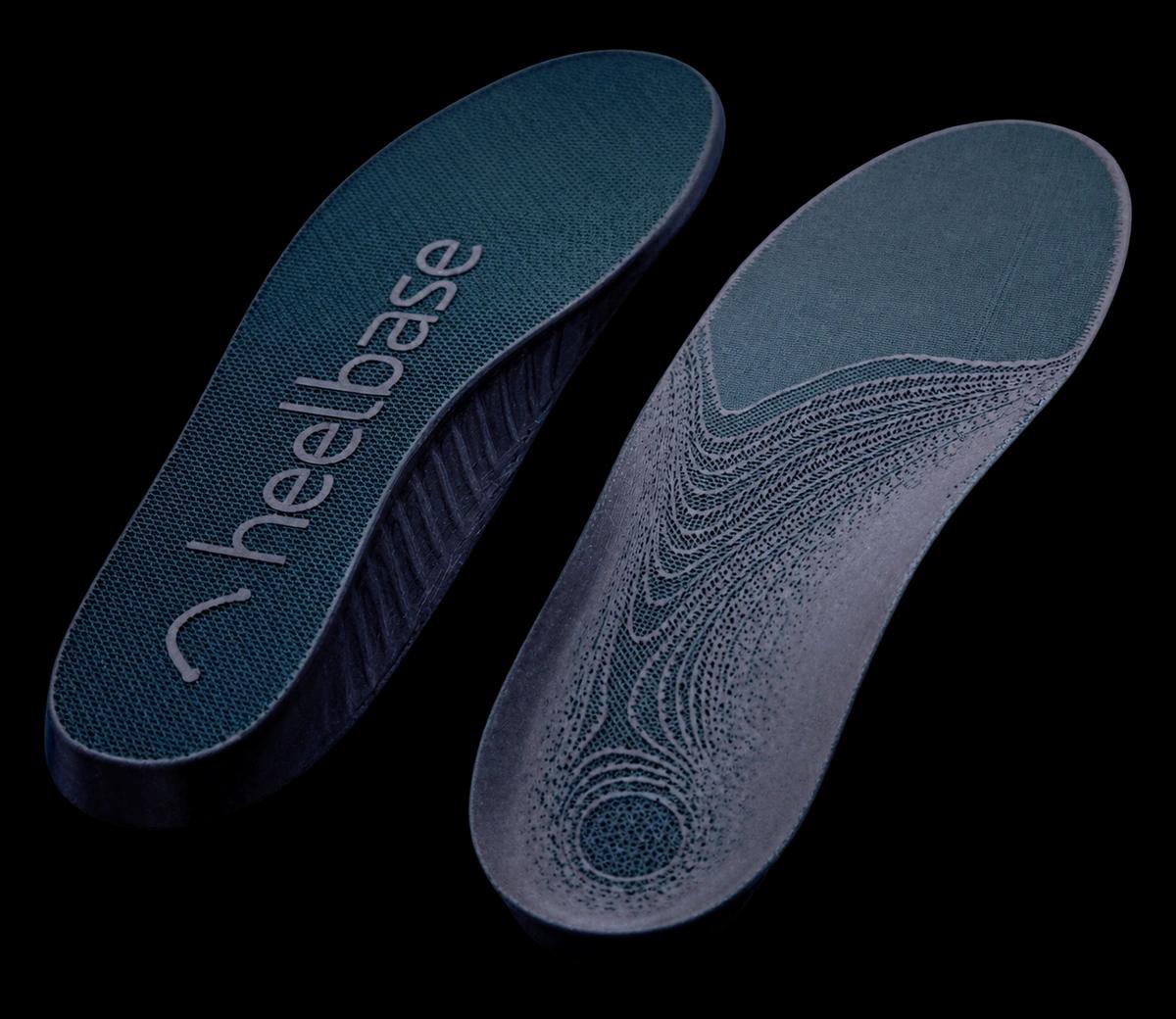
A quick note before this part: Drive is our product. It's a full-length court insole that replaces your shoe's factory liner instead of sitting on top of it, which is the setup this page recommends for keeping room over the instep.
It's printed as one piece in nine exact sizes, so there's no trimming and no guessing where the arch ends up. The 16mm arch cradle supports the arch along its length, and the 11.3mm heel cup holds the heel in place, which can reduce the urge to crank the top laces.
If your fit check points to a crowded or slipping setup, HeelBase Drive is one option to try. If the signs point to a stress fracture or a compressed nerve, get that assessed first, because no insole is the right first step for those.
HeelBase insoles
Pickleball support starts inside your shoes
HeelBase makes three distinct insoles: a 3D-printed insole for regular court play, a reinforced insole for tournament volume, and a cushioned insole for off-court daily wear.
View HeelBase insolesFrequently Asked Questions
Why does the top of my foot hurt after playing pickleball?
Most often it's pressure over the instep from laces tied tight to lock the heel, or an insole that leaves too little room in the shoe. Irritated tendons, a compressed nerve, a stress fracture and midfoot arthritis are less common causes to rule out.
Can tight shoelaces cause top of foot pain?
Yes. Laces sit directly over tendons and a nerve with little padding between them. Tight lacing, especially at the top eyelets, can cause a sore line across the instep or burning between the first two toes. Skipping the eyelet over the sore spot often helps.
Can insoles cause pain on top of the foot?
They can if they add too much height. An insole placed on top of the factory liner, or a thick insole in a close-fitting court shoe, pushes your foot up into the upper. Remove the factory liner and choose a profile that suits your shoe.
How do I know if top of foot pain is a stress fracture?
Warning signs include pain at one spot you can press with a fingertip, swelling on top of the foot, and pain that worsens with each session or lingers at rest. Early X-rays can look normal, so get it assessed instead of playing through.
Should I play pickleball with pain on top of my foot?
If it's a mild lace or pressure ache that settles once the setup changes, you can usually keep playing. Stop if the pain sits on one spot of bone, comes with swelling or numbness, or gets worse each time you play.
What does burning on top of the foot mean?
Burning or tingling, especially between the big toe and second toe, often points to pressure on a nerve instead of a tendon. Loosen the laces over the area and check the fit. If it persists once the pressure is gone, have it looked at.
Can high arches cause pain on top of the foot?
They can. A high arch sits taller in the shoe, so the instep is closer to the laces and the upper. High arches are also linked with compression of the nerve that crosses the top of the foot. A lower-profile insole and looser top lacing usually help.
How long does top of foot pain take to go away?
Pressure soreness often fades within a day or two once the laces or fit change. Tendon irritation can take a couple of weeks of lighter play. A stress fracture usually needs several weeks away from impact, guided by a clinician.
Take the Pressure Off, Then Rebuild
Most top of foot pain after pickleball comes down to pressure: laces, liner, insole thickness and foot volume all competing for the same space. Sort out the setup first, cut back for a few days, and the ache usually fades. Pinpoint bone pain, swelling or lasting numbness are the exceptions to take straight to a clinician.
If you'd like a second opinion on which insole suits your foot and shoe, the HeelBase assessment asks a few quick questions about how and where you play.