Pickleball spends a lot of time on the outside edge of your foot. Every wide dink you stretch for, every shuffle along the kitchen line and every hard stop to change direction loads the outer border of the foot and the tendons that hold the ankle steady. When that area starts to ache, it's usually telling you something about load, shoes or foot shape.
Outer foot pain after pickleball usually comes from overworked peroneal tendons, a high arch or worn shoe that keeps weight on the outer edge, or a shoe that's too narrow at the little toe. Less often it's a cuboid problem or a stress fracture of the fifth metatarsal, which needs imaging.
Below, you'll find why the game loads the outer foot, the six most likely causes, a location table, how to check whether you supinate, what insoles and shoes can do, and the signs that mean you need an assessment.
Key Takeaways
- Lateral shuffles, wide lunges and hard stops put repeated load on the outer edge of the foot.
- Pain behind or below the outer ankle bone often comes from the peroneal tendons.
- High, rigid arches and supination keep weight on the outer border with every step.
- A tender spot along the outer edge, midway down the foot, needs checking for a stress fracture.
- A bump at the base of the little toe that rubs usually means the shoe is too narrow there.
- Insoles that support the arch and cup the heel can spread load away from the outer edge.
- Previous ankle sprains raise the odds of outer foot problems, so balance work is part of prevention.
Why Does Pickleball Load the Outside of the Foot?
Court movement is mostly sideways. When you push off to cover a ball, your trailing foot loads along its outer edge before it drives you the other way. When you stop hard at the kitchen line, the outside of the planted foot takes much of the braking force. Repeat that for two hours and the outer border of the foot does a lot of work.
Injury data reflect this. In a review of pickleball injuries at one medical center, foot and ankle injuries most often happened when players pushed off one foot to reach a ball or ran toward the kitchen line, and ankle sprains often involved the foot rolling over onto its outer edge.
The outer foot also takes the strain when the ankle is a little unstable. A foot that wobbles toward its outside edge asks the tendons along the outer ankle to fire harder and more often, which is why outer foot pain and old ankle sprains so often go together.
Surface and shoes add to it. Outdoor courts grip the shoe hard, so the foot stops abruptly while the body keeps moving, and court shoes that have worn down along their outer edge tilt the foot further outward on every step.
What Causes Pain on the Outside of the Foot?
1. Peroneal Tendon Strain
The two peroneal tendons run behind the bony bump on the outside of your ankle and along the outer foot. One of them attaches at the base of the fifth metatarsal, the long bone behind your little toe. Their job is to stop your foot rolling outward, so lateral play keeps them busy for the whole session.
Overworked peroneals ache behind or just below the outer ankle bone and along the outer foot, often with some swelling. The pain usually builds during long sessions or after a jump in playing time. Because these tendons cross the ankle, the same problem often shows up as ankle pain from pickleball instead of foot pain.
Recovery assessment
Wondering which support suits your foot shape?
Share where you feel discomfort, your arch type and how often you play. The HeelBase assessment recommends support built around those answers.
Start the assessment2. High Arches and Supination
A high, rigid arch keeps more of your weight on the outer edge of the foot, and the foot tends to roll outward, or supinate, as you push off. That concentrates load along the outer border and the little toe side, and a rigid foot absorbs less shock, so more of each landing travels through those structures.
Supination and ankle sprains often travel together, because a foot that already sits on its outer edge has less margin before the ankle rolls. Cushioning and full arch contact tend to suit this foot better than firm control, which is the usual approach for high arches on court.
3. Cuboid Pain
The cuboid is a small, block-shaped bone in the middle of the outer foot, just in front of the heel. Players describe cuboid pain as a deep ache on the outside of the midfoot that makes pushing off or walking on uneven ground uncomfortable, sometimes after a sprain or a long run of lateral work.
It's poorly understood. Cuboid syndrome is thought to come from a subtle disruption of the joint between the cuboid and the heel bone, and its symptoms resemble a ligament sprain. A review of cuboid syndrome found no definitive diagnostic test, so a clinician's hands-on assessment counts for a lot.
4. Fifth Metatarsal Stress Fracture
The fifth metatarsal runs along the outer edge of your foot to the little toe. Its base takes a lot of load when you push off the outside of your foot, and stress fractures there, including the area known for Jones fractures, are a recognized problem in court and field sports.
Warning signs are pain at one spot along the outer edge, roughly midway between the heel and the little toe, that worsens with play and may ache at rest. Fractures in this area are known for slow bone union, so don't keep playing to see whether it settles. Get it imaged.
5. Tailor's Bunion and Narrow Shoes
A tailor's bunion is a bony bump on the outside of the foot at the base of the little toe. Court shoes that taper at the front press on it during every lateral push-off, and the skin over it can redden, thicken or blister.
Even without a bump, a toe box that's too narrow squeezes the little toe side. If the pain sits right at the widest part of your foot and eases as soon as the shoe comes off, width is the first thing to check, in the shoe and in the insoles for wide feet you put inside it.
6. An Irritated Nerve Along the Outer Foot
The sural nerve runs down the back of the calf, curls behind the outer ankle bone and continues along the outer edge of the foot. When it's irritated, the pain feels different from a tendon or bone problem: burning, tingling or extra sensitivity along the outer heel and foot instead of a deep ache.
Repeated ankle sprains and tight footwear are among the factors linked with it. A 2025 review of foot nerve entrapments notes that it's often overlooked as a cause of exercise-related leg pain, so mention the burning quality if you see someone about it.
Outer Foot Pain by Location
Where the pain sits is the best first clue. Use this table to narrow it down, then check the matching section above.
| Where it hurts | Possible cause | Typical pattern | Next step |
|---|---|---|---|
| Behind or below the outer ankle bone | Peroneal tendons | Ache and swelling after long sessions | Reduce load, add ankle strength work |
| Along the whole outer edge | High arch or supination | Broad ache, outer-edge shoe wear | Cushioned insole with full arch contact |
| Middle of the outer foot | Cuboid | Deep ache on push-off, often after a sprain | Hands-on assessment |
| One spot midway along the outer edge | Fifth metatarsal stress fracture | Pinpoint pain that worsens with play | Stop playing and get imaging |
| Base of the little toe | Tailor's bunion or narrow shoe | Rubbing and redness at the widest point | Wider shoe or toe box |
| Outer heel and foot, burning | Sural nerve | Burning, tingling or sensitivity | Ease tight footwear; get it checked if it lingers |
Is It Your Ankle or Your Foot?
The line between the two is blurry on the outside of the leg. The peroneal tendons and the ligaments you damage in a sprain sit right at the junction, so pain from either can spread into the outer foot. A useful rule of thumb: pain that sits around and behind the ankle bone is more likely tendon or ligament, while pain further forward along the foot points toward bone, the cuboid or your shoe.
If you've sprained that ankle before, assume the two are connected until shown otherwise. A loose ankle makes the outer foot and its tendons work harder on every lateral step, and fixing the ankle often settles the foot.
Do You Supinate? Three Quick Checks
Supination means the foot rolls outward and stays on its outer edge longer than usual. These checks give you a rough idea:
- Look at an old pair of court shoes from behind. Heavy wear on the outer edge of the outsole and a heel counter leaning outward suggest supination.
- Wet your feet and stand on a piece of cardboard or a dark towel. A print with a thin or missing band along the outer midfoot points to a high arch.
- Balance on one leg for half a minute. If your foot keeps tipping toward its outer edge and you fight to stay balanced, the outer ankle muscles are working hard.
None of these is a diagnosis, but if all three point the same way, the outer foot is probably taking more than its share of every step.
Shoes worn down on the outer edge make it worse, because they tilt the foot further outward. Replace them once the outsole is smooth on that side or the heel counter leans, and look for other signs of worn-out shoes while you have them in your hands.
Do Insoles Help Outer Foot Pain?
For high-arched feet, there's good evidence. In a sham-controlled trial of 154 people with painful high-arched feet, custom orthoses improved foot pain and function more than sham insoles, and pressure was spread more evenly across the whole foot. A 2026 review of insole research called it the cleanest positive evidence in its analysis.
Off-the-shelf insoles can apply the same principle if the shape suits you. Look for:
- Arch contact along the full length of the arch, so weight is shared instead of sitting on the outer edge.
- A deep heel cup that holds the heel centered instead of letting it tip outward.
- Cushioning under the heel and forefoot for a rigid foot that absorbs little shock itself.
- A profile that leaves room in the shoe, so the outer toes aren't squeezed.
Be wary of DIY fixes such as stacking wedges or pads under the outer edge. Changing how the foot tilts shifts load to other places, including the knee and ankle, and that kind of adjustment is best made with a clinician's guidance.
What Shoes Help Outer Foot Pain?
Choose court shoes with a wide, flat base, a firm heel counter, and an outsole that extends slightly beyond the upper at the sides. Those features keep the shoe upright when you plant on its outer edge, and they're the core of good lateral stability gear for the court.
Fit across the forefoot is just as important as support. The widest part of your foot should sit at the widest part of the shoe, with no pressure on the little toe joint when you push off sideways. If the shoe comes in a wide version, try it with your insole in place before you decide.
Running shoes are a poor substitute here. Their soft, narrow-based heels are built for straight-line movement, and they let the foot tip over its outer edge far more easily when you shuffle or stop.
Product spotlight
The first 3D-printed insole for the court
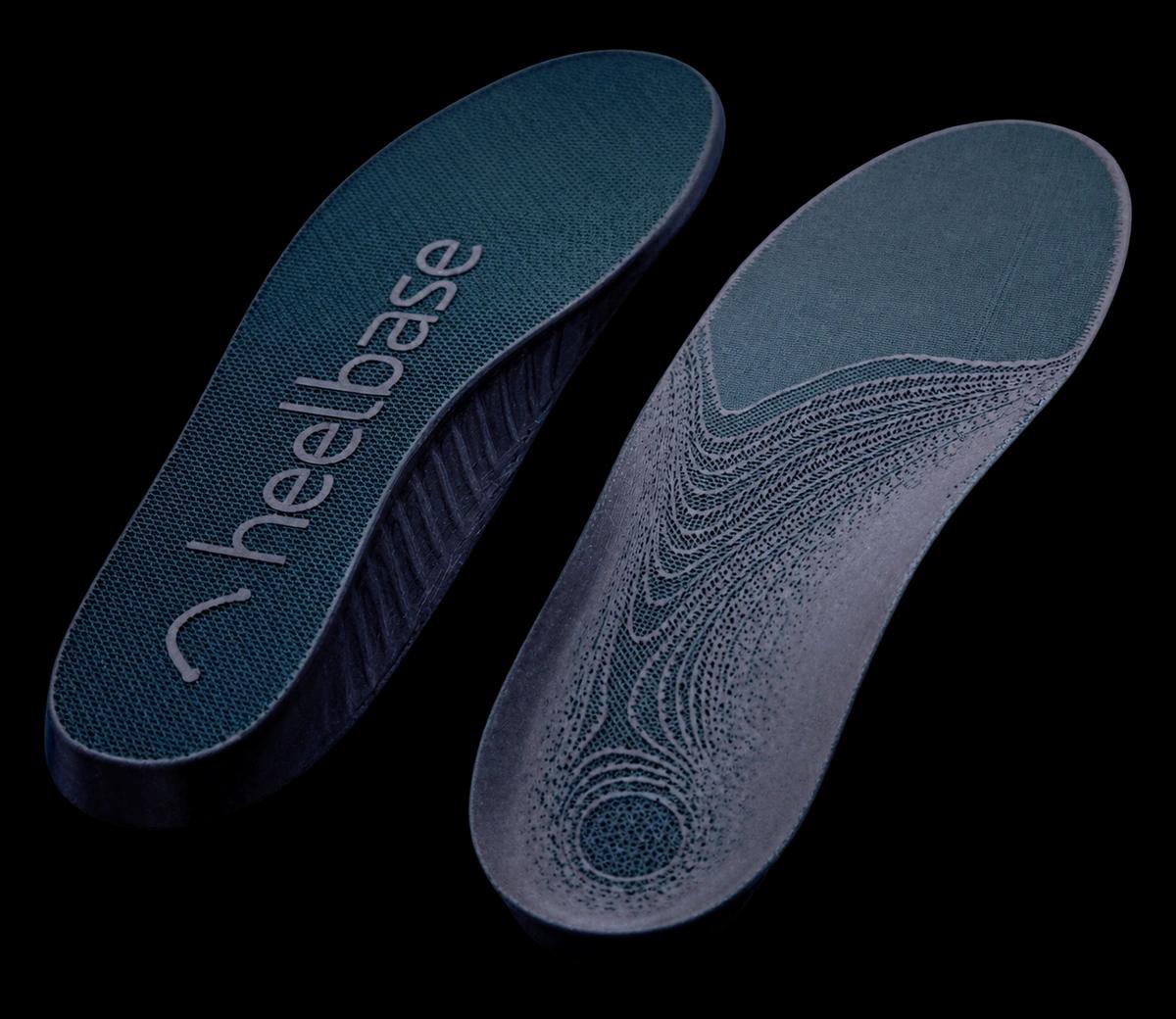
Drive is printed as one continuous piece, engineered to the millimeter, with no glue lines and no bonded foams to separate. An 11.3mm printed heel pocket and shaped arch shell keep load off your plantar fascia through long sessions.
Shop DriveStrength and Balance for the Outer Foot
Strong outer ankle muscles share the load with the bones and tendons of the outer foot. A few minutes, three times a week, goes a long way:
- Banded eversion. Loop a resistance band around your forefoot and push the foot outward against it, slowly, for three sets of 15.
- Single-leg balance. Stand on one foot for 30 seconds, then add head turns or a cushion to make it harder.
- Calf raises with a steady ankle. Rise onto your toes without letting the heel drift outward.
- Side shuffles at half speed. Focus on landing with the foot flat instead of on its outer edge.
Balance training also lowers the risk of the ankle sprains that so often come before outer foot problems, and preventing ankle rolls protects the outer foot at the same time.
How Long Does Outer Foot Pain Take to Settle?
Tendon and overload aches usually ease within one to three weeks once you cut back and fix the shoe or insole setup. Pain from a narrow toe box often goes as soon as the pressure does. Cuboid pain varies, and some players notice a quick change after hands-on care while others need longer.
A fifth metatarsal stress fracture is the slow one. Bone in that area is known for taking its time, so expect weeks away from court play and follow your clinician's plan for returning. Coming back early is the most common way to turn a stress fracture into a longer problem.
Whatever the cause, return gradually. Start with drills and short games, add court time week by week, and watch for the pain returning at the same spot the next morning.
When Should You See Someone About Outer Foot Pain?
Get the foot examined if any of these apply:
- Pain at one spot along the outer edge of the foot, especially midway along it.
- A pop, sudden sharp pain or bruising after a push-off or a rolled ankle.
- Swelling behind the outer ankle bone that doesn't settle with rest.
- A feeling of the tendons snapping or slipping behind the ankle bone.
- Burning, tingling or numbness along the outer foot that lingers.
- Pain that stops you walking normally or gets worse each session.
A sports medicine doctor, physical therapist or podiatrist can examine the foot and arrange imaging if a stress fracture is possible. Fifth metatarsal fractures in particular are easier to deal with when they're caught early.
How Drive Fits the Picture
Since Drive is our insole, we'll keep this part brief. It's built around the two features this page keeps returning to: an 11.3mm heel cup that holds the heel centered, and a 16mm arch cradle that contacts the arch along its whole length.
It's printed as one piece from a single material, with a firmer 64 Shore A arch shell and a softer 51 Shore A heel pad, in nine exact sizes that are never trimmed. It replaces your shoe's factory liner, which helps keep room for the little toe side of the foot.
It isn't the answer to a stress fracture or a nerve problem, and those need assessing first. For outer foot aches tied to foot shape and long sessions, HeelBase Drive is a court insole to consider alongside the shoe and strength changes above.
HeelBase insoles
Pickleball support starts inside your shoes
HeelBase makes three distinct insoles: a 3D-printed insole for regular court play, a reinforced insole for tournament volume, and a cushioned insole for off-court daily wear.
View HeelBase insolesFrequently Asked Questions
Why does the outside of my foot hurt after pickleball?
Lateral shuffles and hard stops load the outer edge of the foot. Common causes include overworked peroneal tendons, a high arch that keeps weight on the outer border, worn shoes and a too-narrow toe box. Less often it's cuboid pain, an irritated nerve or a fifth metatarsal stress fracture.
What is peroneal tendonitis?
It's irritation of the peroneal tendons, which run behind the outer ankle bone and along the outer foot. It causes an ache, and sometimes swelling, behind or below the ankle bone, usually after long sessions or a jump in playing time. Less load and outer ankle strength work usually help.
Can high arches cause outer foot pain?
Yes. A high, rigid arch keeps more weight on the outer edge of the foot and absorbs less shock, so the outer border works harder with every step. A cushioned insole with full arch contact and a stable court shoe can spread that load more evenly.
How do I know if outer foot pain is a stress fracture?
Look for pain at one spot along the outer edge, often midway between the heel and little toe, that worsens with play or aches at rest. Fractures in this area can be slow to mend, so stop playing and get an X-ray or other imaging.
Can shoes cause pain on the outside of the foot?
They can. Shoes that are too narrow press on the little toe joint, and shoes worn down on the outer edge tilt the foot outward. Choose a court shoe with a wide, flat base and a firm heel counter, and replace it before the outsole is smooth.
Should I play pickleball with outer foot pain?
A mild ache that settles after rest and doesn't sit on one spot can usually be managed with shorter sessions and better support. Stop and get assessed if you have pinpoint pain, swelling behind the ankle bone, a pop during play, or pain that gets worse each time.
Do insoles help with supination?
They can help if your foot shape is the driver. Insoles with full arch contact and a deep heel cup share load across the foot instead of leaving it on the outer edge. Avoid stacking wedges yourself, since changing the foot's tilt shifts load elsewhere.
Read the Outer Edge, Then Adjust
Outer foot pain after pickleball usually reflects how hard the game works the outside of your foot. Check where it hurts, look at your shoe wear, support the arch and heel, and build outer ankle strength. Pinpoint bone pain or a pop during play is the exception, and needs imaging before anything else.
For help choosing support that suits your arch and your court time, the HeelBase assessment gives you a recommendation after a few short questions.