Most people judge a new pair of shoes by walking a few steps across the store. That tells you very little about a pickleball shoe. The test that counts comes when you stop hard at the kitchen line, push off sideways, or reach for a ball wide of your body, and your foot tries to keep moving inside the shoe.
Pickleball shoes should fit snugly at the heel and midfoot, with about a thumb's width of space past your longest toe and room to spread your toes. Your heel shouldn't lift as you push off, and your foot shouldn't slide toward the edge when you shuffle sideways. Try them late in the day, in your court socks.
Below are the six fit points to check, how to test them in a store, how tight is too tight, when sizing up helps, and how insoles change the picture. The checks work for any brand, because fit depends on your foot, not the logo.
Key Takeaways
- Aim for snug at the heel and midfoot, with room for your toes to spread at the front.
- Leave about a thumb's width between your longest toe and the end of the shoe.
- Your heel shouldn't lift during a push-off or a lunge.
- Your foot should stay on the platform during side shuffles, not slide toward the edge.
- Shop late in the day, in your court socks, with any insoles you plan to use.
- Try a wide version before you go up half a size.
- Test with shuffles, split steps and lunges, not just a walk across the store.
Why Do Pickleball Shoes Need a Different Fit?
A walking or running shoe mostly has to handle forward motion. Your foot rolls from heel to toe, and the shoe moves with it. A pickleball shoe has a harder job. It has to keep your foot on its platform while you change direction, stop short and push off sideways, often several times in one rally.
Every one of those movements tries to shift your foot inside the shoe. On a hard stop, the foot slides forward toward the toe box. On a side shuffle, it slides toward the outside edge. On a push-off, the heel tries to lift out of the back of the shoe. A good fit limits all three without squeezing your foot.
That's why a shoe that feels comfortable standing still can fail on court. Fit is really about control, and control comes from the parts of the shoe that hold your foot, not just the length. Shoes are only one part of the picture, though. Our checklist of gear for lateral stability ranks shoes, insoles, lacing and socks by how much each adds.
The Six Fit Points to Check
Work through these in order. The first three decide most fit problems, and the last three catch the issues that only show up once you start moving.
1. Toe room: about a thumb's width
Stand up with your weight on both feet and press the front of the shoe. You want roughly a thumb's width between your longest toe and the end of the shoe. That space absorbs the forward slide on a hard stop, and it allows for your feet swelling over a long session. Measure to your longest toe, which isn't always the big toe.
Room to spread matters as much as length. A study of 30 basketball players found that a slightly larger toe box, enlarged by just 3mm, cut lateral shuffle times by about 3.5% and sidestep cutting times by nearly 8%. The authors said the results challenge the usual tight-fitting design of court shoes.
If your toes touch the front during a stop, or your nails take a beating after long sessions, the length is wrong. Black or bruised nails are usually a fit signal, and protecting your toenails starts with the length and toe box height checks you make here.
Recovery assessment
Not sure what your feet need?
Tell us where you feel discomfort and how often you play. The HeelBase assessment will guide you toward the most relevant support option.
Start the assessment2. Width at the ball of your foot
The widest part of your foot should sit at the widest part of the shoe, without bulging over the edge of the sole. Press the upper at the sides of the ball of your foot. You should feel the material resting against you, not straining. If the sides of your foot press out over the platform, the shoe is too narrow.
Many court shoes come in a wide version, often labeled 2E for men or D for women. Try the wide version in your normal length before you go up half a size. A longer shoe adds room at the front but leaves your heel further from where it should sit.
3. Heel hold: no lift on push-off
Your heel should sit firmly in the back of the shoe and stay there. Walk a few steps, then rise onto your toes and push off sideways. A tiny amount of movement is normal in new shoes. A heel that clearly lifts out of the counter will rub, and it gives your foot room to shift on every stop.
Support around the rear of the shoe seems to count during cuts. In a study of basketball athletes, shoes with support at the rear of the upper slowed how fast the ankle rolled outward during side-cuts compared with shoes without it. The researchers tested the shoe's structure, not fit, but it points the same way: a held heel is a steadier heel.
If the heel slips in an otherwise good shoe, lacing is often the fix. A heel lock uses the extra top eyelet to cinch the collar around your ankle, and our list of lacing fixes for foot problems shows how to tie it.
4. Midfoot lockdown: held, not pinched
Lace the shoe as you would for a match. The midfoot should feel wrapped, so the shoe moves when your foot moves, but you shouldn't feel pressure points across the top of your foot or numbness after a few minutes. A shoe that only feels secure when you crank the laces tight is probably the wrong shape for your foot.
5. Lateral containment: the foot stays on the platform
This is the check most people skip. Do a few quick side shuffles in each direction. Your foot should stay centered over the sole, not roll over the edge or slide toward the outside of the upper. A flat, fairly wide outsole and a firm upper along the outside of the forefoot both help here.
Look at the sole from behind and from the side as well. A sole that flares slightly wider than the upper gives your foot a broader base to land on, while a narrow or heavily rounded edge makes it easier to roll over during a quick change of direction.
6. Room for the insole you'll wear
If you use an aftermarket insole or an orthotic, fit the shoe with it inside. An insole raises your foot in the shoe, which takes up room over your toes, across the instep and at the heel collar. A shoe that fits perfectly with its factory liner can feel tight once your own insole goes in, and the fixes for tight court shoes run from free lacing changes to a thinner insole.
How Do You Test the Fit in the Store?
A fitting takes about ten minutes if you come prepared. Run this sequence with each pair you're considering:
- Shop late in the afternoon or after you've played, when your feet are at their largest.
- Bring the socks you play in and any insoles or orthotics you'll use.
- Take out the factory liner if you're testing with your own insole.
- Try both shoes on, since many people have one foot slightly longer than the other.
- Check toe room, width and heel hold standing up, with your weight on each foot.
- Shuffle sideways in both directions, then add a few split steps and a lunge each way.
- Walk around for five minutes and notice any rubbing or pressure that builds.
If the store has a hard floor, use it. Carpet hides the slide and grip problems a court will expose. If you're buying online, run the same sequence at home on a hard surface, and keep the shoes clean until you're sure they work.
Should Pickleball Shoes Be Tight or Loose?
Neither. The answer depends on which part of the shoe you mean. The back and middle should be snug, because that's where the shoe holds your foot. The front should be roomy, because that's where your toes need space to spread and slide. A shoe that's tight everywhere, or loose everywhere, will cause problems.
| Area | Should feel | Too tight if | Too loose if |
|---|---|---|---|
| Toes | Room to wiggle and spread | Toes touch the end on a stop | More than a thumb's width of space |
| Ball of the foot | Upper resting against you | Foot bulges over the sole | Foot slides side to side |
| Midfoot | Wrapped and secure | Pressure or numbness on top | Foot shifts when you shuffle |
| Heel | Seated in the counter | Rubbing at the back of the heel | Heel lifts on a push-off |
Socks shift the balance more than most players expect. A thick cushioned sock takes up room at the toes and across the instep, while a thin one leaves the shoe feeling looser at the heel. Fit your shoes in the socks you'll play in, and keep using that style, so the fit you tested is the fit you get on court.
It's also worth knowing that most fit rules are rules of thumb. A 2026 review of the evidence behind footwear fit guidelines, carried out in people with diabetes, rated the research on recommended length, width and depth as very low to low quality, and concluded that the clearest guidance is simply wearing the right size. Use the checks above as a starting point, then trust how the shoe behaves when you move.
Do You Size Up for Pickleball Shoes?
Not by default. Start with your measured foot length, not the size of your last pair, because sizing varies between brands and even between models from the same brand. The wall method for measuring your feet takes a few minutes at home and gives you a length in millimeters that converts cleanly to US and EU sizes.
Expect your court shoe size to differ from your running or casual size now and then. Court shoes are often built on a different shape, with a lower, flatter platform and a firmer upper, so the same number can fit differently. Use the size on the box as a starting point and let the toe, width and heel checks decide.
Go up half a size only when your toes reach the front of the shoe during a stop, or when the toe box is too short with your insole inside. If the problem is pressure across the ball of your foot, a wide version in your normal length usually fits better than a longer shoe.
If you're between sizes, try both. Choose the smaller one only if it passes the toe check during a hard stop. Choose the larger one if the smaller pinches anywhere, then use lacing to take up any extra room at the heel and midfoot.
How Do Insoles Change the Fit?
An insole changes the inside of the shoe more than its thickness suggests. It raises your heel in the collar, lifts the top of your foot toward the laces, and shortens the space over your toes. That's why the best time to buy court shoes is with your insoles in your bag.
Always take the factory liner out before adding your own insole. Stacking the two crowds the shoe and leaves your new support sitting on soft foam. If the shoe goes tight with the insole in, try a different lacing pattern or a lower-volume insole before you change the shoe.
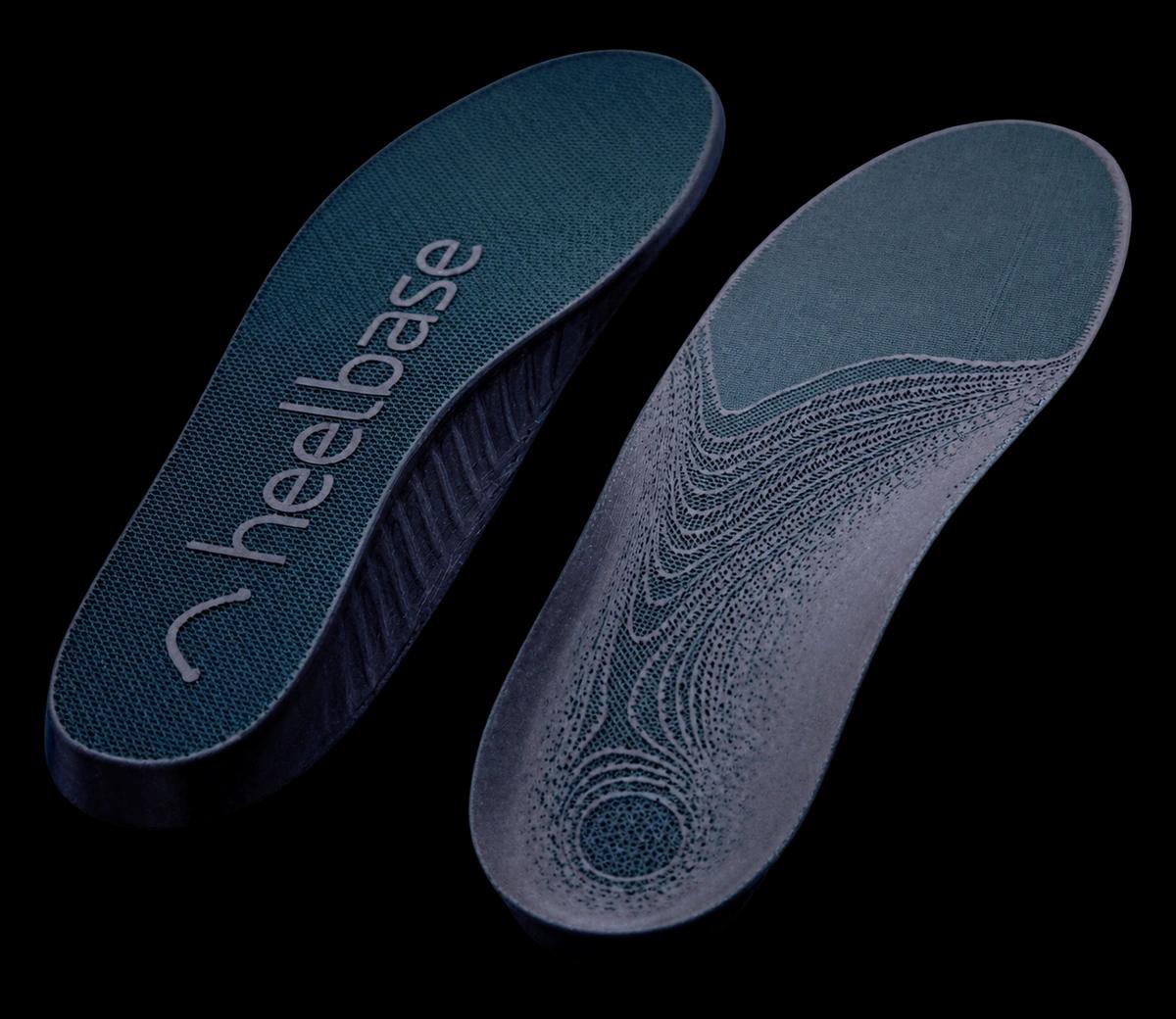
Insole sizing affects shoe fit too. A trim-to-fit insole can be cut to the exact outline of your shoe's liner, while an exact-size insole like HeelBase Drive arrives in the size you wear, with nothing to cut. Either way, the insole should sit flat, reach the end of the footbed, and leave your heel fully seated.
Product spotlight
The first 3D-printed insole for the court
Drive is printed as one continuous piece, engineered to the millimeter, with no glue lines and no bonded foams to separate. An 11.3mm printed heel pocket and shaped arch shell keep load off your plantar fascia through long sessions.
Shop DriveHow Is Pickleball Shoe Fit Different From Running Shoe Fit?
The checks overlap, but the priorities differ. A running shoe is fitted around a forward stride, so length, cushioning and how the shoe flexes at the toes get most of the attention. A court shoe is fitted around control, so heel hold, midfoot lockdown and a stable platform come first.
Running shoes also tend to sit higher off the ground, with softer foam under the heel. That helps when you're running in a straight line, but it gives your foot more room to tip over the edge of the sole when you move sideways. If you play in running shoes now, expect a court shoe to feel firmer and lower at first.
Tennis shoes are a different story. They're court shoes built for the same kind of side-to-side movement, so the six checks apply to them unchanged, and plenty of players use one pair for both sports. If you do, the insole question is the one to settle, and the answer to whether tennis and pickleball need different insoles depends on how often you play each.
When Does a Good Fit Stop Fitting?
Fit changes over time, even in the same pair. Uppers stretch, foam packs down, and the heel counter softens with wear. A shoe that held your heel firmly in its first month can let it slip after a season. Your feet change too, and many people find their feet get a little longer or wider over the years.
Recheck your fit whenever you notice new rubbing, a heel that starts to slip, or soreness that wasn't there before. Those can be signs of worn-out pickleball shoes, and a quick look at the outsole and heel counter will usually confirm it.
What Are the Signs Your Pickleball Shoes Don't Fit?
Some fit problems only show up after a few weeks of play. Your feet are the best guide, and these patterns usually point back to the shoe rather than to your feet or your technique:
- Bruised or darkened toenails, especially on the longest toe, which suggest too little length or a shallow toe box.
- Blisters at the back of the heel, a sign the heel is lifting and rubbing.
- Numbness or tingling in the toes partway through a session, often from a narrow toe box or laces pulled too tight.
- Hot spots under the ball of the foot, which can mean the foot is sliding forward on every stop.
- Soreness on the outside of the ankle after lateral play, a hint that the foot is rolling toward the edge of the sole.
If any of these keep coming back, run the six fit checks again with the shoes you play in now, not a new pair. Numb toes in particular deserve attention, and the common causes of burning or numb toes often trace back to width and lacing pressure. Pain that persists after you've fixed the fit is worth having checked by a podiatrist.
HeelBase insoles
Pickleball support starts inside your shoes
HeelBase makes three distinct insoles: a 3D-printed insole for regular court play, a reinforced insole for tournament volume, and a cushioned insole for off-court daily wear.
View HeelBase insolesFrequently Asked Questions
How much room should be in the toe of pickleball shoes?
About a thumb's width between your longest toe and the end of the shoe, measured while you stand with your weight on that foot. That space absorbs the forward slide on a hard stop and allows for your feet swelling during play. Your toes should also have room to spread, not just room in front.
Should pickleball shoes be tight?
They should be snug at the heel and midfoot, so your foot doesn't shift when you change direction, but roomy at the toes. A shoe that's tight all over will rub and can cause numbness or bruised nails. One that's loose all over lets your foot slide on every stop.
Do you need to size up for pickleball shoes?
Only if your toes reach the front of the shoe during a stop, or there's not enough length once your insole goes in. If the shoe feels tight across the ball of your foot, try a wide version in your normal length first, since going longer can leave your heel loose.
What if you're between sizes in pickleball shoes?
Try both sizes late in the day, in your court socks and with your insoles in. Pick the smaller size only if your toes stay clear of the end during a hard stop. Otherwise take the larger size and use a heel lock lacing pattern to take up any extra room at the heel and midfoot.
Is it normal for my heel to slip in new pickleball shoes?
A tiny amount of movement is normal while the shoe breaks in. A heel that clearly lifts out of the counter on a push-off isn't. Try a heel lock lacing pattern first. If the heel still lifts, the shoe's heel shape probably doesn't suit your foot.
Do pickleball shoes stretch?
The upper softens and gives a little with wear, especially in the forefoot, but the length doesn't change in any useful way. Don't buy a shoe that's too short and hope it will stretch. Buy for length and heel hold, and expect the upper to feel a little less stiff after a few sessions.
How should women's pickleball shoes fit?
The same six checks apply: toe room, width, heel hold, midfoot lockdown, lateral containment and room for your insole. Some brands build women's models on a different shape from their men's models, so if a women's shoe feels narrow, it can be worth trying the wide version or a men's size.
Can I wear wide shoes for pickleball?
Yes. A wide version is often the best choice for players whose feet press against the sides of a standard shoe. Check that your heel still sits firmly in the counter, since some wide versions are wider at the back as well as the front.
Fit the Shoe to the Way You Move
A good pickleball fit holds your heel and midfoot, gives your toes room, and keeps your foot on the platform when you move sideways. Check toe room, width and heel hold first, then test with shuffles and lunges, and fit the shoe with the socks and insoles you'll actually play in.
If your feet still hurt in shoes that fit well, the HeelBase assessment takes about two minutes and helps you work out what kind of support your feet need on court.